

 Send Email
 whatsapp


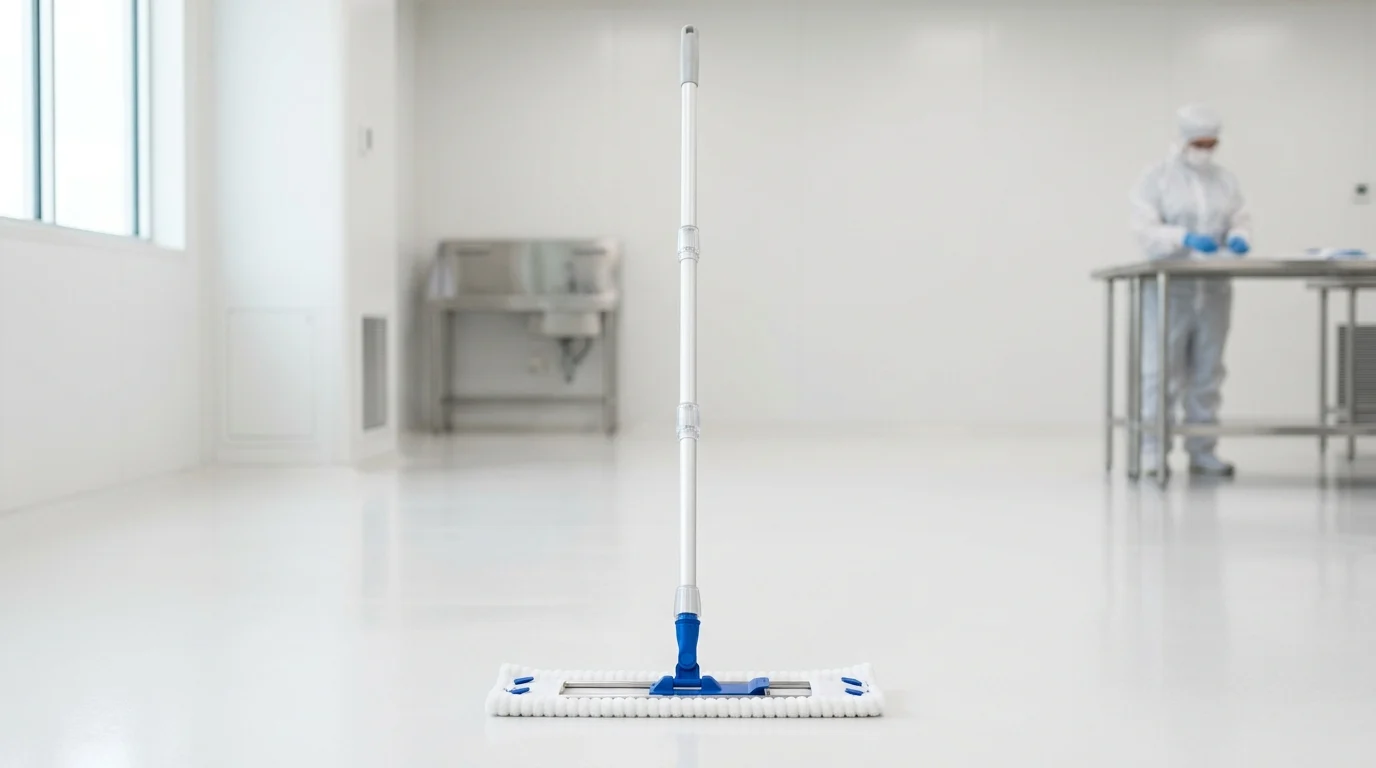
In controlled manufacturing, a mop is not a commodity—it is a contamination-control component that can influence sterility assurance, wafer yield, and regulatory readiness. Pharmaceutical teams must manage bioburden, disinfectant compatibility, and Annex 1 expectations, while semiconductor fabs must guard against particles, ions, residues, and electrostatic effects at microscopic scales. This guide explains how to evaluate cleanroom mop materials, construction, sterilization status, packaging, and fit for ISO-classified zones. It also highlights why low-lint performance, sealed edges, validated laundering, and chemical compatibility matter when the cost of a contamination event can rapidly exceed the price of the cleaning system itself.
Strategic Importance of Cleanroom Mop Selection
Facility managers and quality assurance professionals in pharmaceutical and semiconductor manufacturing face stringent regulatory demands to control particulate and microbial contamination. Modern contamination control strategies, guided by frameworks such as the revised EMA Annex 1 and FDA cGMP guidelines, require meticulous environmental monitoring and surface sanitization. Surface cleaning protocols serve as the primary defense against yield-degrading particulate accumulation and bioburden proliferation. Central to these protocols is the selection of specialized cleaning implements engineered specifically for controlled environments.
The deployment of an inappropriate Cleanroom Mop can introduce catastrophic contamination events, leading to batch rejections or wafer defects that routinely cost facilities tens of thousands of dollars per hour in halted production. Consequently, facility operators must evaluate mop systems not merely as generic janitorial supplies, but as critical process consumables governed by rigorous physical and chemical standards.
Defining Cleanroom Mops for ISO-Classified Areas
Defining cleaning tools for ISO-classified environments requires adherence to strict physical parameters. A standard industrial mop sheds thousands of fibers per square meter, whereas a certified Cleanroom Cleaning Mop designed for ISO Class 3 to 5 areas is manufactured to emit exceptionally low particle counts in accordance with published standards such as IEST-RP-CC004. These strict thresholds are achieved through specialized manufacturing techniques, such as ultrasonic or laser sealing of the fabric edges to prevent fiber unraveling. It should be noted that in critical Grade A/B and ISO Class 3–5 zones, facilities frequently rely on specialized cleanroom wipes or automated cleaning systems for primary work surfaces, utilizing mops primarily for floors and broader structural areas to prevent overstating the mop's role in the highest-grade environments.
Furthermore, true cleanroom implements are typically laundered in ultra-pure water systems and double-bagged under vacuum within an ISO Class 4 environment. This rigorous processing establishes a baseline of ultra-low particulate generation before the equipment ever breaches the end-user's controlled environment airlock.
Contamination Risks Linked to Mop Choice
In pharmaceutical operations, the primary risk associated with inferior mop selection is microbial contamination. Regulatory frameworks mandate stringent bioburden controls, requiring surface microbial counts to remain below facility-specific limits. Using a mop with poor chemical resistance can result in the neutralization of sporicidal agents, allowing pathogens to survive the cleaning process.
Conversely, semiconductor fabrication plants prioritize micro-contamination control, where trace metal ions leaching from mop materials can cause fatal short circuits in nanometer-scale architectures. In these environments, ion extractables must frequently be controlled to strict benchmark ranges defined by facility requirements. Utilizing non-compliant materials risks exposing sensitive silicon substrates to particulate fallout, triboelectric charging, or chemical residues that disrupt delicate photolithography or etching processes.
Key Cleanroom Mop Specifications to Compare
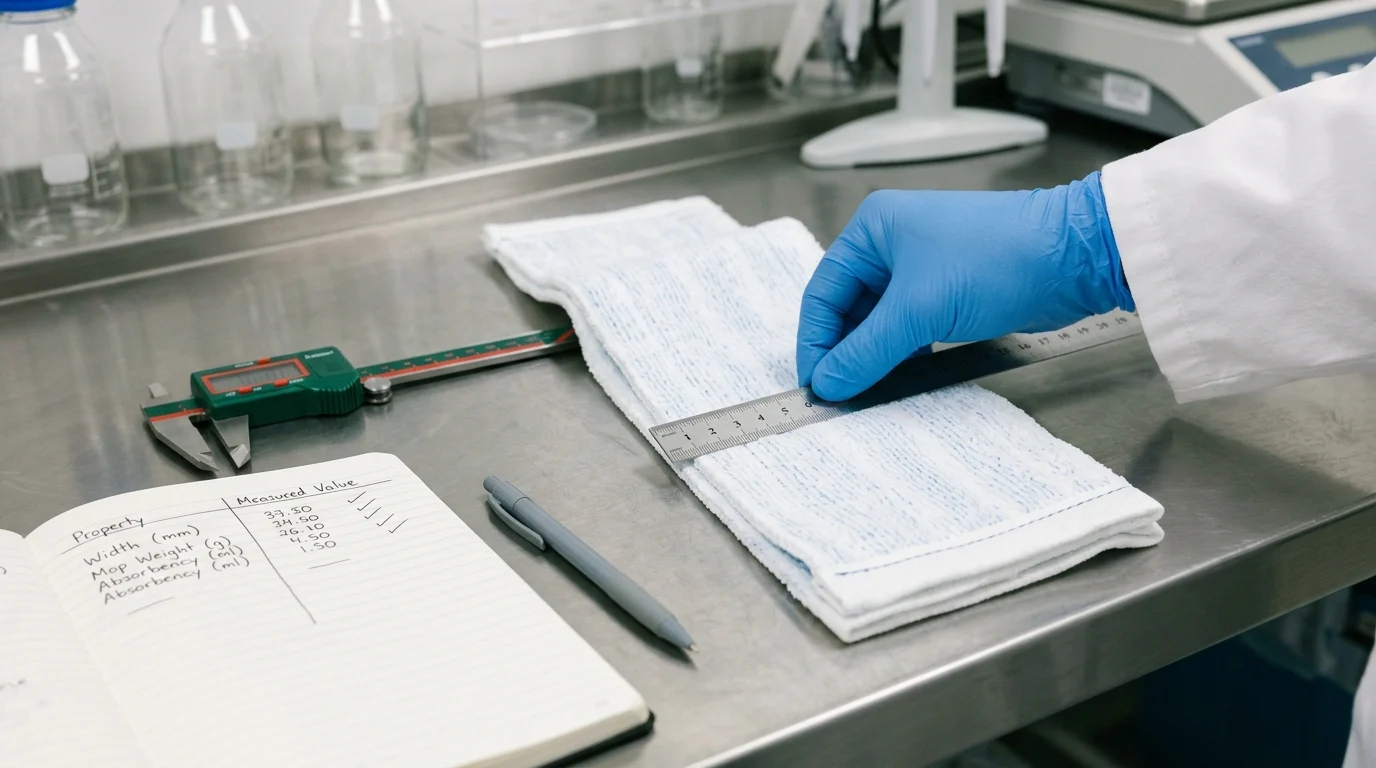
Evaluating cleaning implements requires a methodical comparison of material specifications, sterilization levels, and ergonomic design. The physical architecture of the mop directly dictates its fluid absorbency, chemical compatibility, and particulate shedding profile, while ergonomic considerations significantly impact operator fatigue and adherence to standardized cleaning motions (such as unidirectional or S-pattern strokes).
Sterile, Low-Lint, and Disposable Mop Options
Facilities must carefully evaluate the operational trade-offs between sterile and non-sterile, as well as disposable and reusable configurations. For aseptic pharmaceutical environments, sterile mops are mandatory, typically undergoing gamma irradiation at carefully calibrated doses between 25 and 40 kGy to achieve an industry-standard Sterility Assurance Level (SAL) of 10^-6.
| Feature | Disposable Single-Use Mops | Reusable Autoclavable Mops |
|---|---|---|
| Upfront Cost | Lower per unit | Higher initial investment |
| Sterility Validation | Pre-validated (CoC/CoA provided) | Requires in-house autoclave validation |
| Particulate Shedding | Consistently ultra-low | Increases after 30+ laundry cycles |
| Ideal Application | ISO Class 3-4 / Grade A & B | ISO Class 5-8 / Grade C & D |
Disposable systems entirely eliminate the risk of cross-contamination and the administrative overhead of laundry validation. Consequently, they are frequently a preferred choice in high-tier classified zones where the cost of a contamination excursion far outweighs the recurring expense of single-use consumables. However, this disposable-versus-reusable cost analysis must be balanced against environmental sustainability. The continuous disposal of single-use plastics and synthetic textiles presents a growing challenge for corporate Environmental, Social, and Governance (ESG) mandates, representing a real operational caveat. When opting for reusable autoclavable mops, facilities must implement validated laundry processes (e.g., per IEST-RP-CC005.3 guidelines). Repeated sterilization cycles cause progressive fiber degradation, which directly increases particulate shedding and reduces absorbency over time.
Materials, Head Designs, and Handle Features
The substrate material of the Mop Head governs its interaction with surface contaminants and liquid disinfectants. Continuous-filament polyester and advanced microfiber blends, frequently utilizing an 80/20 ratio of polyester to nylon, are the industry standards. These materials offer superior capillary action, allowing astandard mop head to retain optimal volumes of fluid for uniform application without excessive dripping.
Beyond substrate materials, head geometry dictates application suitability. Flat rectangular mops are the industry norm for uniform coverage on both floors and walls. While older protocols sometimes utilized string or Loop Mops for irregular surfaces, these are now generally avoided in ISO-classified environments because they trap contaminants and are notoriously difficult to launder and validate. Pocket-style frames provide secure attachment during vigorous scrubbing, whereas foam-core heads are favored for their exceptional liquid retention.
When selecting a specialized Cleanroom Floor Mop, hardware features are equally vital to the consumable head. Hardware must withstand harsh sporicidal agents and repetitive sterilization. Anodized aluminum and electropolished 316L stainless steel handles are highly recommended—and often required by internal SOPs—as they resist corrosion and prevent the shedding of metallic flakes that commonly occurs with lower-grade hardware. Compatibility with cleanroom-grade buckets and wringers is also essential to ensure proper fluid management.
Qualification, Sourcing, and Implementation
Transitioning from specification to active facility integration involves rigorous qualification procedures and strategic supply chain management. The implementation phase must align with established standard operating procedures (SOPs) to ensure consistent cleaning efficacy and regulatory compliance.
Practical Steps for Cleanroom Mop Validation
Validation protocols for cleaning implements typically
Key Takeaways
- Select cleanroom mops as process-critical consumables, not general janitorial supplies, because poor mop choice can cause batch rejection, wafer defects, and costly downtime.
- For ISO Class 3–5 environments, prioritize low-lint mop materials with sealed edges and documented particle-control performance.
- Pharmaceutical facilities should verify mop compatibility with disinfectants and sporicidal agents to avoid neutralizing cleaning chemistry.
- Semiconductor facilities should evaluate mop materials for ion extractables, trace metal risk, residues, and electrostatic behavior.
- Use cleanroom-laundered and double-bagged mop systems where contamination-control requirements demand ultra-low baseline particle levels.
- Match mop design to the surface and zone: critical work surfaces may require wipes or automated systems, while mops are best suited for floors and larger structural areas.
Frequently Asked Questions
Why are standard industrial mops unsuitable for cleanrooms?
Standard mops can shed fibers, particles, and residues that compromise ISO-classified environments. Cleanroom mops are engineered for low particle generation, often using sealed edges and controlled laundering to reduce contamination risk.
What standards matter when selecting a cleanroom mop?
Facilities commonly evaluate mops against ISO cleanroom requirements, IEST-RP-CC004 guidance, EMA Annex 1 expectations, and FDA cGMP contamination-control principles, depending on the application and regulatory environment.
Are cleanroom mops used in Grade A or ISO Class 3 areas?
In the most critical zones, mops are usually used for floors and larger structural surfaces. Primary work surfaces often rely on specialized wipes or automated systems to minimize direct contamination risk.
What mop features reduce particulate shedding?
Low-lint fabrics, ultrasonic or laser-sealed edges, cleanroom laundering with ultra-pure water, and double-bagged packaging help reduce fiber release and particle contamination before use.
How do pharmaceutical and semiconductor mop requirements differ?
Pharmaceutical facilities prioritize microbial and chemical disinfectant compatibility, while semiconductor fabs focus heavily on particulate control, ion extractables, trace metals, residues, and electrostatic risks.