

 Send Email
 whatsapp


Introduction
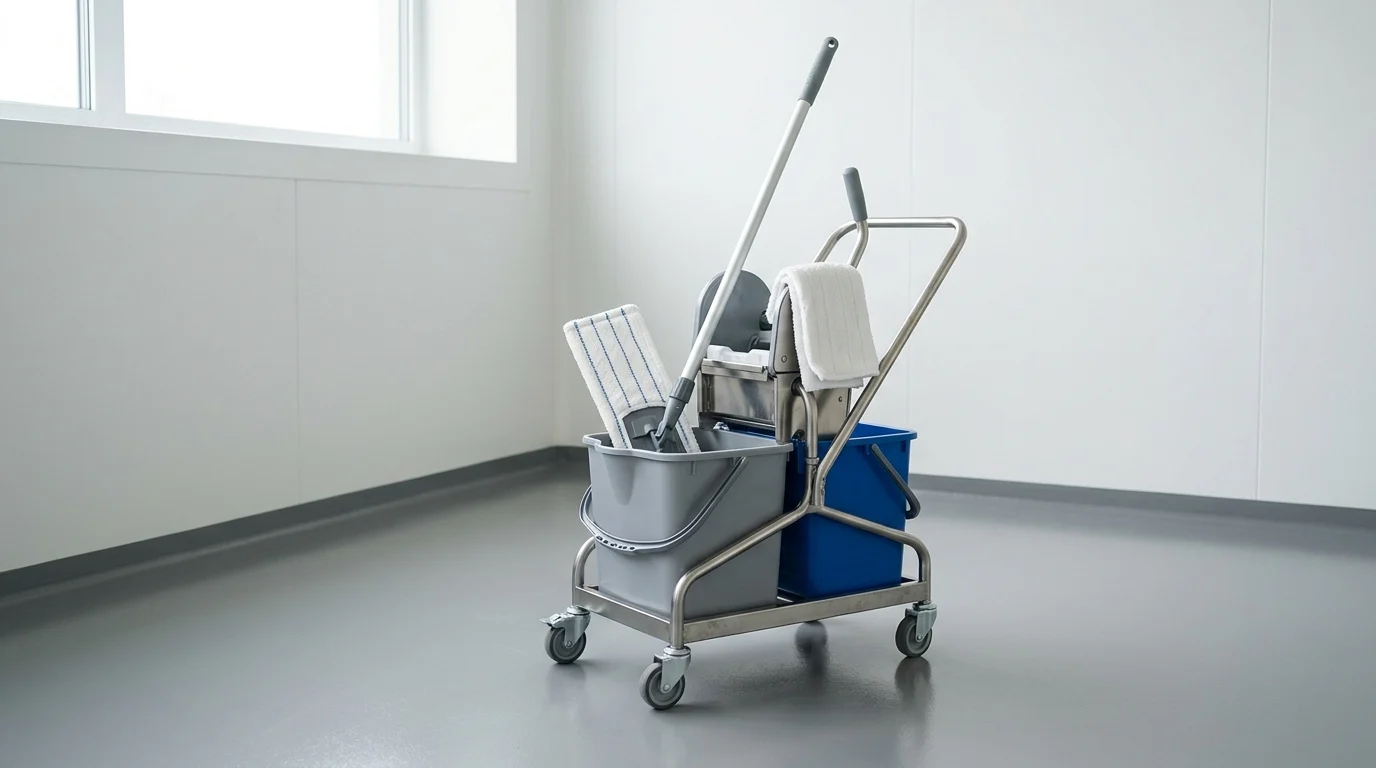
In laboratory cleanrooms, mops are not simple janitorial tools; they are part of the contamination control system that protects samples, processes, and compliance. Choosing the right mop affects particle shedding, disinfectant delivery, surface coverage, and the risk of introducing viable or non-viable contamination into controlled areas. This guide explains how cleanroom mops are designed for sterile environments, what materials and performance features matter most, and how proper selection and use support validated cleaning programs. From ISO-class expectations to compatibility with disinfectants and aseptic workflows, the sections below provide a practical foundation for evaluating mop systems used in laboratory sterile cleaning.
Why Cleanroom Mops Matter in Laboratory Sterile Cleaning Programs
Maintaining a sterile laboratory environment requires rigorous contamination control protocols, where surface cleaning tools play a foundational role. The application of disinfectants and the physical removal of particulate matter demand specialized equipment engineered to prevent the introduction of foreign contaminants. The regulatory landscape governing aseptic processing strictly dictates the acceptable limits of viable and non-viable particulates, mandating that every tool introduced into the controlled environment is meticulously vetted.
Definition and role in contamination control
A high-performance lab cleanroom mopis manufactured from low-linting materials, typically continuous filament polyester or specialized microfibers, designed to apply precise volumes of sporicidal agents while capturing microscopic debris. In environments regulated by ISO 14644-1, particularly ISO Class 4 and 5 zones, these mops must demonstrate ultra-low particle generation, often shedding fewer than 1,200 particles (≥0.5µm) per square meter during mechanical stress testing. Their primary function extends beyond visible soil removal; they are critical instruments for achieving validated log reductions in surface bioburden. The structural integrity of the Mop Head ensures that the mechanical friction applied to floors and walls maximizes the efficacy of the chemical disinfectants without compromising the surface finish.
Key risks, costs, and performance failures
Substandard mopping systems introduce severe operational risks, primarily through particle shedding, chemical incompatibility, or uneven disinfectant distribution. A cleanroom mop that degrades upon exposure to aggressive agents, such as 0.52% sodium hypochlorite or hydrogen peroxide/peracetic acid blends, can leave polymer residues and compromise sterility. Performance failures in these tools directly correlate with environmental monitoring excursions. For a pharmaceutical or biotechnology laboratory, a single bioburden excursion exceeding the strictly regulated limit of 10 CFU per contact plate can trigger batch rejections. This results in financial losses frequently exceeding $50,000 per incident, alongside the mandatory initiation of exhaustive Root Cause Analysis (RCA) investigations. Furthermore, inefficient absorbency leads to excess chemical usage, inflating consumable costs by up to 30% annually while simultaneously increasing the labor hours required to complete a standard 500-square-meter facility decontamination cycle.
How to Compare Cleanroom Mops for Sterile Cleaning Performance
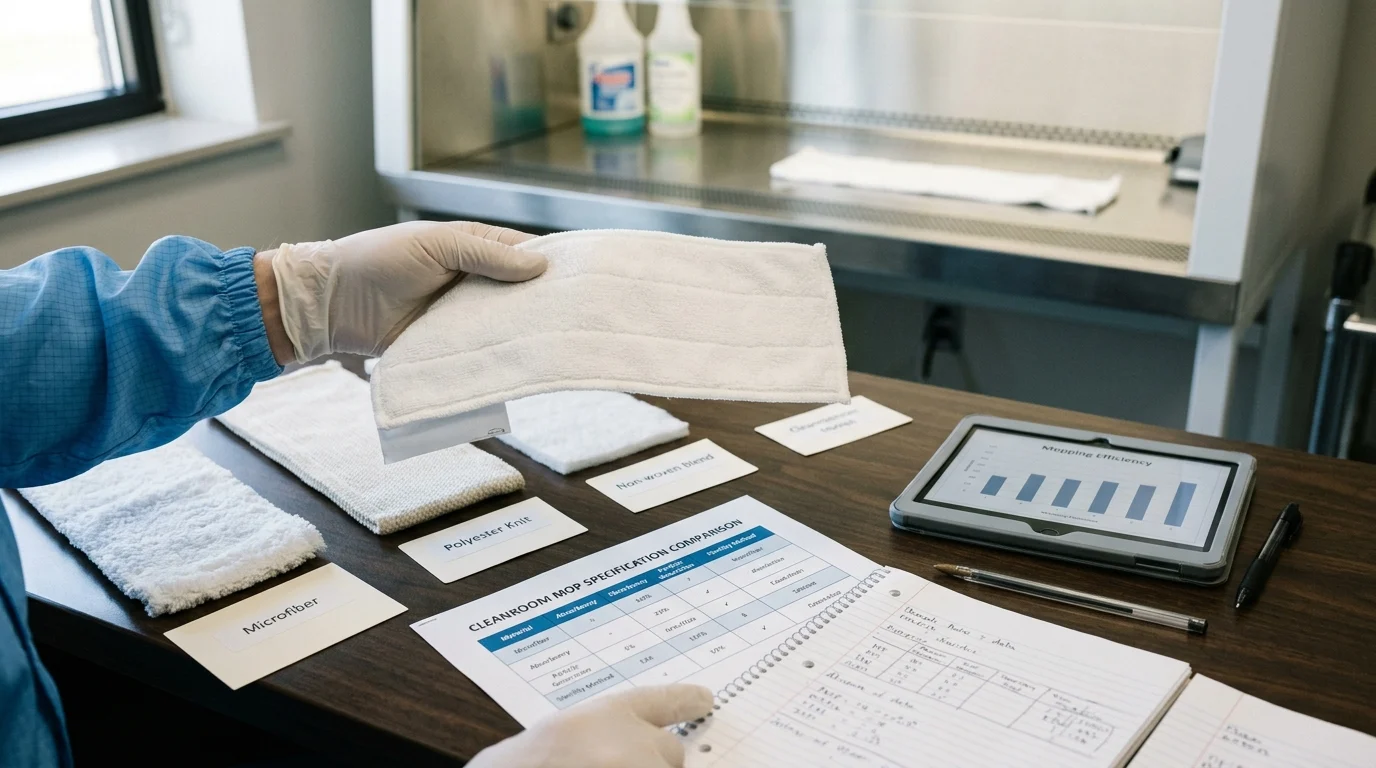
Evaluating surface cleaning tools requires a systematic analysis of material composition, chemical compatibility, and particulate retention. Laboratory managers must scrutinize technical data sheets to ensure the selected equipment aligns with specific environmental classifications and daily disinfection regimens. The variability in substrate performance dictates how effectively a facility can maintain its validated state of control.
Specifications and criteria to compare
Critical comparison criteria include sorbency capacity, abrasion resistance, and sterilization validation. Polyurethane foams offer high fluid retention, often exceeding 400 mL per square meter, but may exhibit lower abrasion resistance compared to continuous filament knits. Conversely, microfiber variants provide superior mechanical cleaning efficacy, capable of removing up to 99.9% of surface microbes even before the chemical action of the disinfectant takes effect. When addressing specific biological threats, facilities may evaluate an antimicrobial cleanroom mop treated to inhibit microbial proliferation within the mop head itself during storage or extended use. Furthermore, for aseptic processing areas, the mop heads must be pre-sterilized, typically validated through gamma irradiation at a dosage of 25 to 40 kGy to ensure a Sterility Assurance Level (SAL) of 10⁻⁶, accompanied by lot-specific certificates of irradiation. The packaging itself must be double or triple-bagged in cleanroom-compatible polyethylene to allow for safe transfer through material airlocks without introducing external contaminants.
Comparison table for sterile cleaning use
To facilitate standardized procurement, the following table contrasts the primary materials utilized in a cleanroom floor mop based on critical performance metrics.
| Material Type | Sorbency Capacity (mL/m²) | Particle Shedding (≥0.5µm/m²) | Chemical Resistance | Optimal ISO Class |
|---|---|---|---|---|
| Knitted Polyester | 250 - 350 | < 1,500 | Excellent | ISO 3 - 5 |
| Microfiber | 300 - 450 | < 2,000 | Good | ISO 4 - 6 |
| Polyurethane Foam | 400 - 600 | < 3,500 | Moderate | ISO 5 - 7 |
| Non-woven Poly-cellulose | 200 - 300 | < 10,000 | Fair | ISO 6 - 8 |
Selecting the optimal material relies on balancing the required fluid distribution for necessary disinfectant dwell times against the strict particulate limits of the designated laboratory zone. Facilities must cross-reference these material capabilities with their specific chemical application requirements to avoid premature material degradation.
How to Select and Implement Cleanroom Mops
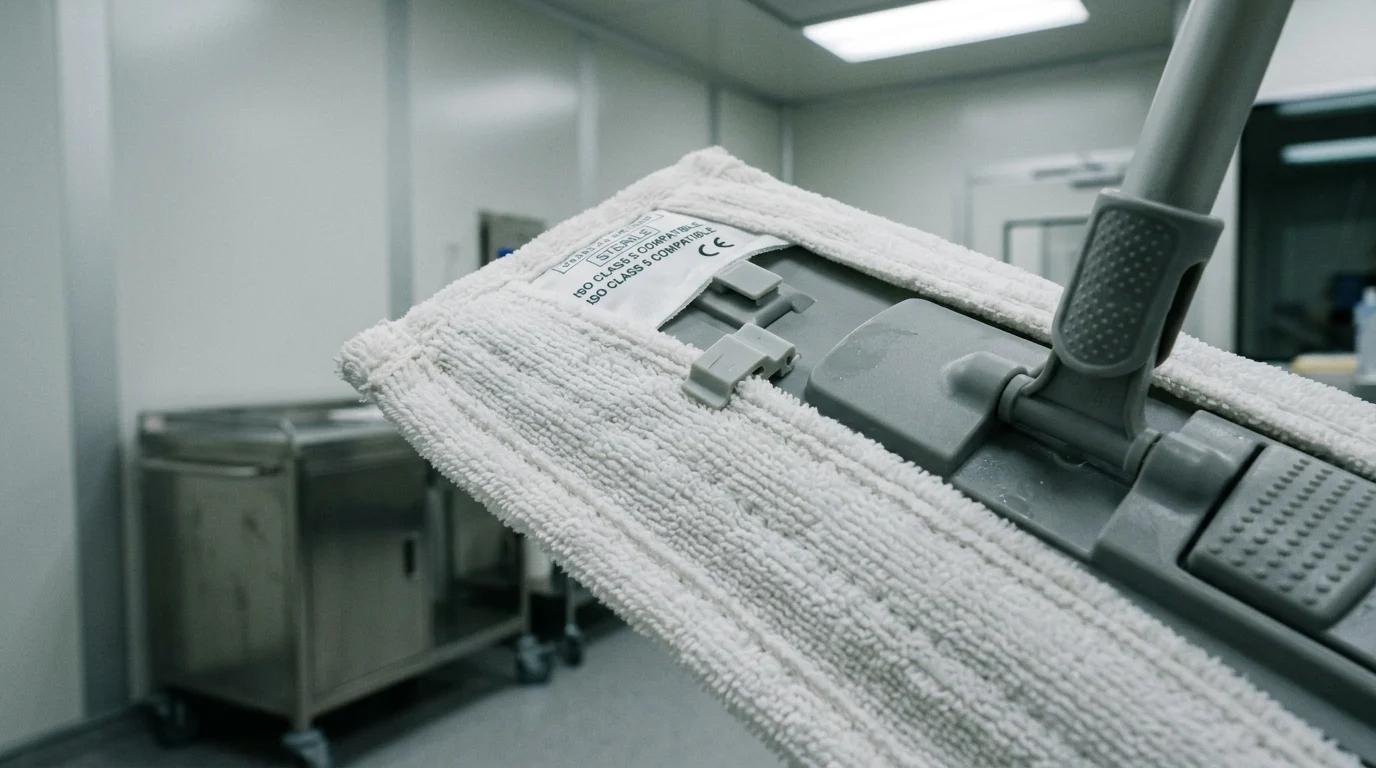
Translating technical specifications into operational excellence necessitates a rigorous qualification process and comprehensive integration into facility Standard Operating Procedures (SOPs). Proper implementation dictates both the efficacy of the cleaning protocol and the operational longevity of the equipment. A well-designed tool is only as effective as the procedural framework governing its use.
Selection, qualification, and SOP integration
The qualification of surface cleaning tools involves documented in situ testing to verify compatibility with existing disinfectants and to confirm that residue levels remain below acceptable thresholds. Once validated, integration into SOPs must specify the precise mopping technique. Industry best practices mandate the unidirectional "pull-and-lift" method, strictly prohibiting bidirectional scrubbing which redeposits contaminants across previously cleaned areas. SOPs should dictate a standard 20% to 30% stroke overlap to guarantee complete surface coverage without dry spots. Furthermore, facilities must define the bucket system configuration; a three-bucket system (disinfectant, rinse water, and waste) reduces cross-contamination by up to 50% compared to traditional two-bucket configurations, ensuring the mop head remains optimally saturated with active, uncontaminated chemistry throughout the cleaning cycle.
Decision criteria for laboratory use
Final decision criteria must account for facility-specific architecture and operator ergonomics to ensure consistent compliance and reduce physical strain during routine decontamination cycles.
Key Takeaways
- The most important conclusions and rationale for Cleanroom Mops
- Specs, compliance, and risk checks worth validating before you commit
- Practical next steps and caveats readers can apply immediately
Frequently Asked Questions
What makes a mop suitable for ISO Class 4 or 5 laboratories?
Choose low-linting mop heads, typically knitted polyester or microfiber, with validated low particle shedding and sterile packaging for controlled-area transfer.
Which cleanroom mop material is best for sterile laboratory cleaning?
Knitted polyester suits the strictest ISO 3-5 areas, while microfiber offers stronger soil and microbe removal for ISO 4-6 labs.
Can cleanroom mops handle harsh disinfectants?
Only if chemical compatibility is verified. Confirm resistance to sodium hypochlorite and hydrogen peroxide/peracetic acid blends before routine use.
Why are pre-sterilized cleanroom mops important in aseptic labs?
They reduce contamination risk on entry. Look for gamma-irradiated mop heads with SAL 10⁻⁶ and lot-specific sterilization certificates.
How can a poor cleanroom mop increase laboratory costs?
Low absorbency and material breakdown waste disinfectant, extend cleaning time, and may contribute to environmental monitoring excursions or batch rejection.