

 Send Email
 whatsapp


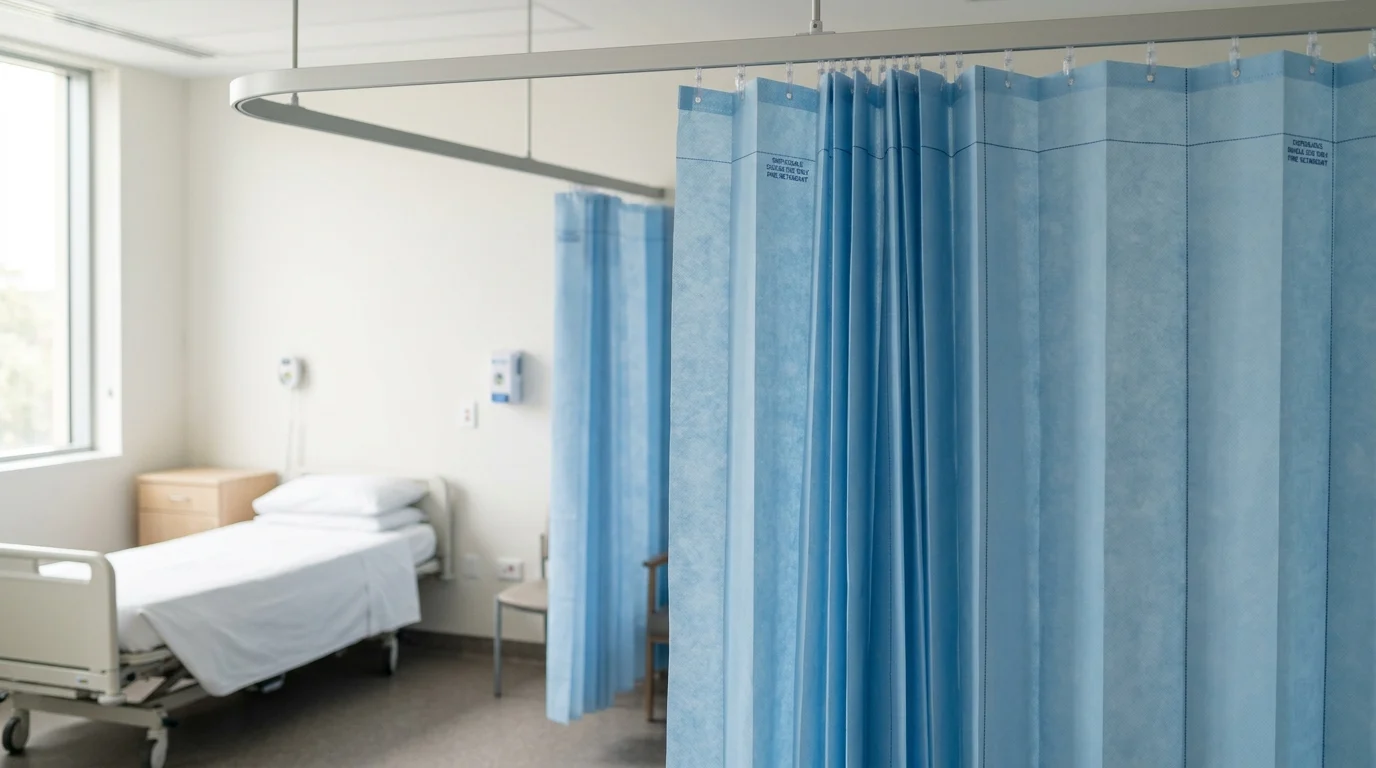
Hospital Privacy Curtains are touched often, changed unevenly, and frequently overlooked in infection-control planning. For EU clinics facing pressure to reduce healthcare-associated infections while controlling labour, laundry, and compliance costs,single-use non-woven barriersoffer a practical alternative to traditional linen. Made mainly from polypropylene, they can simplify changeovers, reduce laundering logistics, and support faster ward turnover in high-risk areas such as ICUs, triage rooms, and isolation spaces. Yet the decision is not purely clinical: procurement teams must weigh unit cost, antimicrobial performance, disposal routes, and EU sustainability expectations. This article examines the practical benefits—and the trade-offs—behind choosing Disposable curtains in modern healthcare settings.
Why EU Clinics Use Disposable Hospital Curtains
European healthcare facilities are increasingly prioritizing environmental hygiene to combat healthcare-associated infections (HAIs). A critical component of this strategy involves reevaluating patient privacy barriers. Switching from conventional textiles to non-woven materials helps EU clinics maintain strict infection control protocols.
Definition and Scope
Made from polypropylene (PP) non-woven fabric, modern disposable curtains serve as physical barriers in triage areas, intensive care units (ICUs), and standard patient wards. Unlike traditional woven fabrics, these synthetic barriers are manufactured with a standardized weight—typically ranging from 100 to 120 grams per square meter (gsm)—ensuring optimal opacity and tear resistance without straining existing ceiling track systems.
The scope of these products extends beyond simple privacy. The manufacturing process creates a material that naturally resists fluids, providing a frontline defense against bloodborne pathogens and aerosolized contaminants in high-traffic clinical zones. While manufacturers often highlight that PP is 100% recyclable, clinics must consider actual environmental and disposal logistics. In reality, many facilities lack dedicated polypropylene recycling streams, meaning these single-use items are frequently routed to clinical waste incineration, which carries its own disposal costs and environmental footprint.
Key Benefits for Clinical Settings
The deployment of single-use privacy barriers offers practical advantages for facility management. They provide immediate pathogen containment, eliminate the need for complex laundering logistics, and simplify compliance tracking while maintaining aesthetic uniformity across wards.
Advanced variants incorporate silver-ion or quaternary ammonium anti-microbial treatments directly into the material during manufacturing. Industry estimates suggest these active treatments can achieve up to a 99.9% reduction in common nosocomial pathogens—including MRSA and VRE—on the curtain surface within a 24-hour contact period. This continuous active pathogen reduction helps lower the risk of cross-contamination via the hands of healthcare workers.
Disposable vs Reusable Hospital Curtains
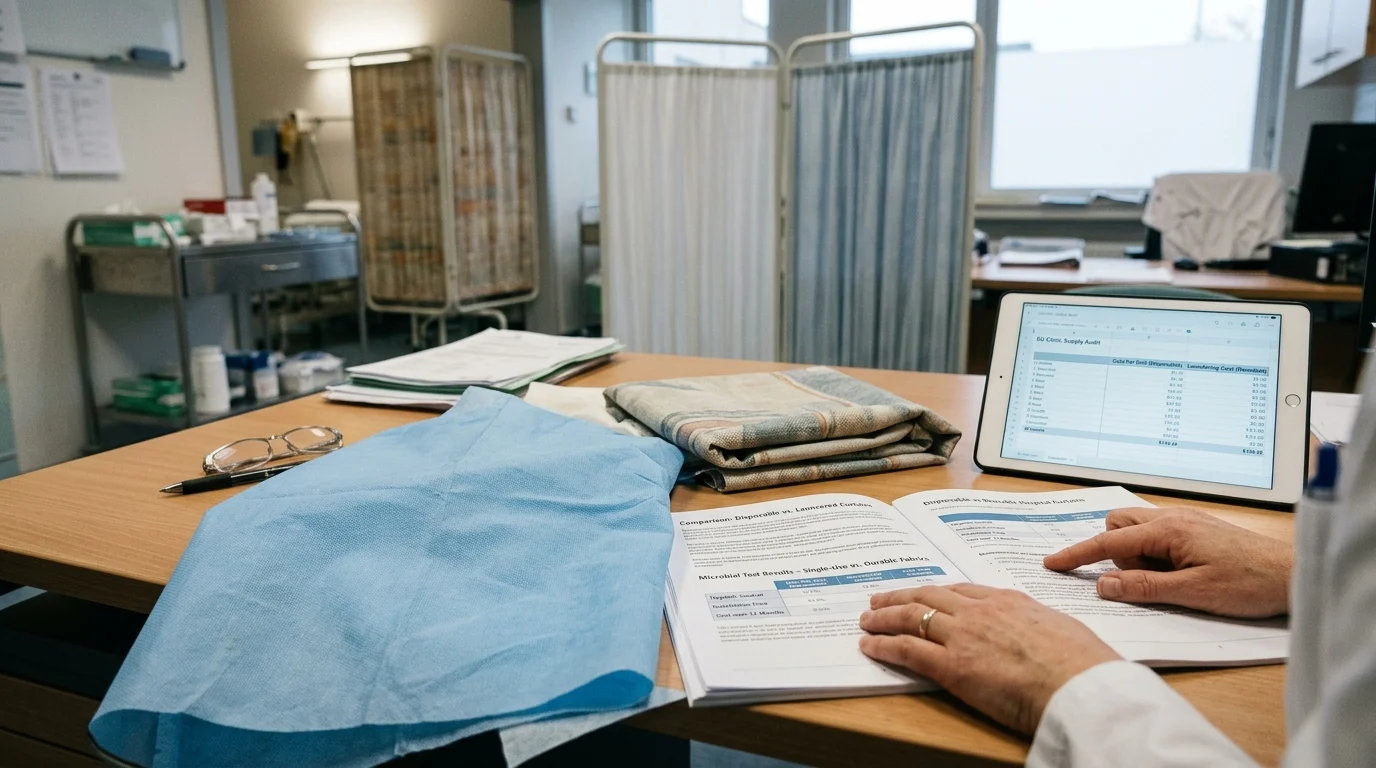
Procurement administrators must balance upfront capital expenditures against long-term operational overhead when selecting privacy solutions. Comparing the two options reveals that single-use alternatives fundamentally alter the total cost of ownership model for healthcare textiles. However, decision-makers must also acknowledge limitations: disposable curtains increase overall clinical waste volume and may face regulatory scrutiny under EU circular economy directives, making reusable curtains preferable in lower-risk wards where sustainability targets outweigh acute infection risks.
Performance and Cost Comparison
Traditional linen requires continuous logistical management, including collection, high-temperature laundering, ironing, and redeployment. This cycle introduces hidden costs and potential cross-contamination vectors if standard operating procedures fail. By contrast, non-woven alternatives provide more predictable financial models. The following table provides illustrative industry estimates for comparison:
| Metric | Single-Use Curtains | Traditional Reusable Linen |
|---|---|---|
| Illustrative Unit Cost | €8 – €15 | €40 – €60 |
| Laundering Overhead | €0 (Plus Disposal/Incineration Costs) | €15 – €20 per wash cycle |
| Changeover Time | 2 – 3 minutes | 10 – 15 minutes |
| Pathogen Retention Risk | Minimal (Discarded after use) | High (If wash protocols are breached) |
Key Specifications to Check
When specifying non-woven barriers, EU clinics must verify technical parameters to ensure regulatory compliance and functional compatibility. Fire retardancy is the paramount specification; curtains must meet stringent European standards, such as EN 13773 Class 1 or the equivalent BS 5867 Part 2 Type C, which mandates that the fabric will not propagate a flame.
Furthermore, standard dimensions—often cited as 7.5 meters in width by 2 meters in drop length—must align with ward requirements to ensure adequate pleating and privacy. Procurement teams should also confirm that the eyelet design matches existing U-shaped or universal track gliders. Standardized internal eyelet diameters of 30mm to 40mm are generally required to avoid supplementary hardware replacement costs.
How EU Clinics Can Implement Disposable Hospital Curtains
Transitioning a clinical facility to a disposable privacy barrier system requires methodical planning. Successful implementation hinges on aligning procurement cycles with strict infection control mandates to ensure seamless availability and consistent pathogen mitigation.
Procurement and Infection Control Steps
The first phase of implementation involves establishing a rigid changeout schedule dictated by ward risk levels. In standard wards, scheduled replacement might occur every 3 to 6 months. However, in high-acuity environments such as ICUs or isolation units, true single-use protocols apply, requiring disposal immediately following patient discharge or visible soiling.
To maintain this cadence, administrators must secure reliable supply chains for replacement curtains. Facilities should anticipate illustrative Minimum Order Quantities (MOQs) ranging from 500 to 1000 units when negotiating direct manufacturer contracts, especially if custom ward color-coding or hospital branding is required. Warehousing space must also be allocated, as bulk shipments of non-woven textiles require dry, climate-controlled storage to prevent premature degradation of anti-microbial coatings.
Decision Criteria for Final Selection
Final vendor selection must be governed by strict decision criteria encompassing both product certification and operational utility. Suppliers must provide valid CE marking documentation and demonstrate adherence to ISO 9001 quality management systems, ensuring batch-to-batch consistency.
Furthermore, clinical managers should prioritize disposable ward curtains that feature integrated audit tracking mechanisms. Products with pre-printed, easily scannable date-of-installation labels enable environmental services staff to monitor lifecycle compliance accurately. This level of traceability guarantees that no curtain exceeds its designated usage window, thereby closing potential gaps in the facility's overall infection prevention strategy.
Key Takeaways
- Specify polypropylene non-woven curtains in the 100–120 gsm range to balance privacy, durability, and compatibility with existing ceiling tracks.
- Use disposable curtains in high-risk areas such as ICUs, triage spaces, and isolation rooms where rapid changeover and contamination control are priorities.
- Compare total cost of ownership, not just purchase price, because disposable curtains remove laundering costs but add disposal or incineration expenses.
- Consider antimicrobial curtain options where appropriate, as some treatments are reported to reduce common nosocomial pathogens by up to 99.9% within 24 hours.
- Plan waste handling before adoption, since recyclable polypropylene curtains may still enter clinical waste streams if no dedicated recycling route exists.
- Retain reusable curtains in lower-risk wards when sustainability goals and reliable laundering protocols make them the better operational choice.
Frequently Asked Questions
What are disposable hospital curtains made from?
Most are made from polypropylene (PP) non-woven fabric, typically around 100–120 gsm, balancing opacity, tear resistance, and compatibility with standard ceiling track systems.
How do disposable curtains support infection control in clinics?
They reduce contact-based contamination risks by being removed and discarded after use. Some variants also include antimicrobial treatments that can reduce pathogens such as MRSA and VRE on the curtain surface.
Are disposable hospital curtains cheaper than reusable linen curtains?
They often have a lower unit cost, commonly estimated at €8–€15 versus €40–€60 for reusable linen. However, clinics must also factor in disposal or incineration costs.
How quickly can disposable curtains be changed?
Single-use curtains can often be replaced in about 2–3 minutes, compared with roughly 10–15 minutes for reusable curtains that require removal, transport, laundering, and redeployment.
Are polypropylene disposable curtains recyclable in the EU?
PP is technically recyclable, but many healthcare facilities lack dedicated recycling streams for used clinical textiles. In practice, contaminated curtains are often handled as clinical waste.