

 Send Email
 whatsapp


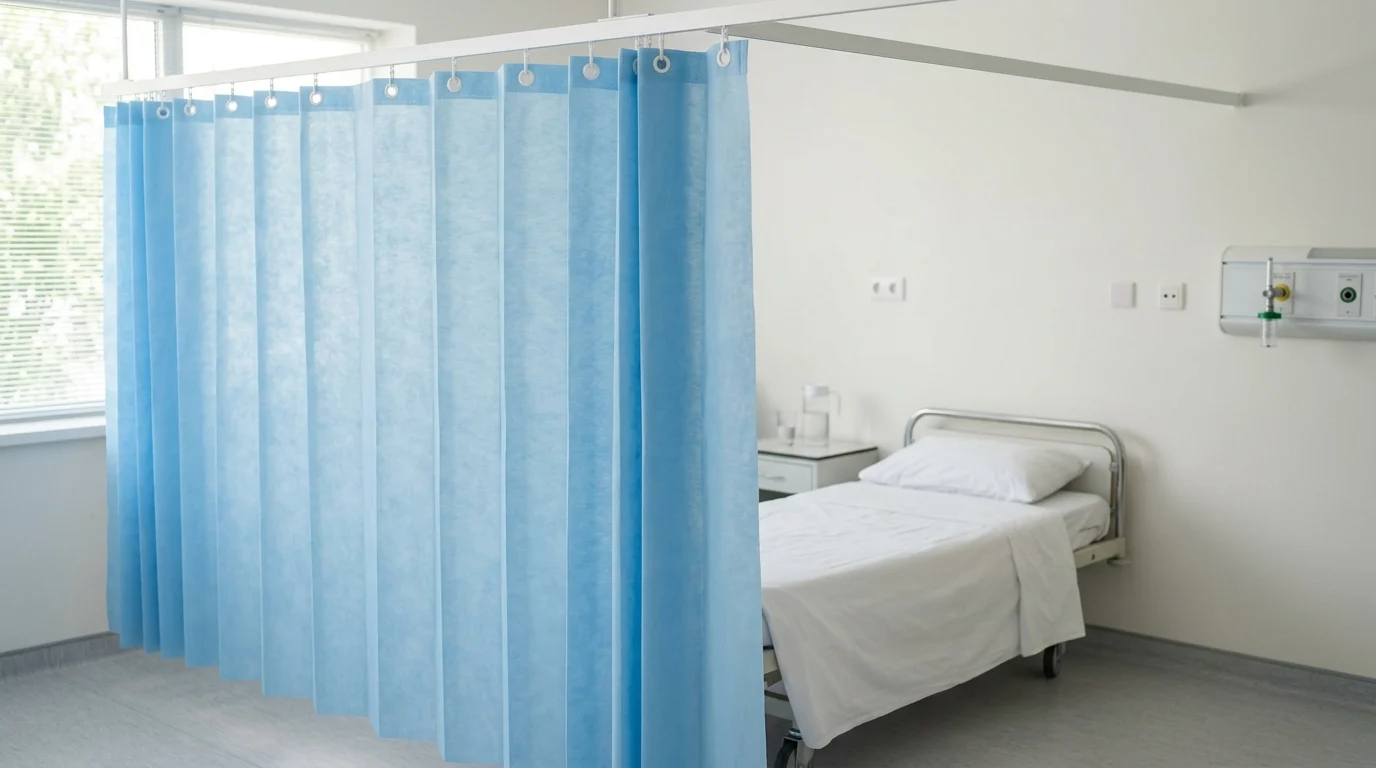
High-touch privacy barriers are often overlooked in infection-control planning, yet they sit directly in the patient zone and can become contaminated quickly. In cleanrooms, ICUs, burn wards, and other high-acuity spaces, curtain choice affects both microbial risk and particulate control. Single-use polypropylene curtain systems offer a practical alternative to reusable textiles by reducing laundering complexity, limiting recontamination cycles, and supporting predictable replacement protocols. This article explains how these barriers are engineered, what specifications matter most, and why details such as low-lint materials, ultrasonic-welded seams, antimicrobial additives, and flame-retardant mesh tops can make a measurable difference in controlled healthcare environments.
Why Disposable Hospital Curtains Matter
Hospital acquired infections (HAIs) pose severe risks in clinical and cleanroom environments, necessitating stringent environmental controls. The physical environment plays a critical role in pathogen transmission, and high-touch surfaces in patient zones are particularly vulnerable. Traditional privacy barriers have long been identified as vectors for these pathogens, prompting a necessary shift in infection control strategies toward disposable barrier systems.
Defining disposable cleanroom privacy curtains
Single-Use Hospital Curtains are engineered physical barriers manufactured primarily from non-woven, 100% recyclable polypropylene. Unlike standard woven textiles, these specialized curtains are explicitly designed for environments requiring strict particulate and bioburden control, such as ISO Class 7 and 8 cleanrooms, intensive care units, and burn wards.
The manufacturing process utilizes ultrasonic welding to create heat-sealed seams, effectively eliminating the thread-based particle shedding commonly associated with traditional sewing. Furthermore, these systems feature integrated, flame-retardant mesh tops—typically comprising the top 20 inches of the curtain—to ensure compliance with ceiling fire sprinkler penetration codes while maintaining optimal airflow in controlled environments.
Disposable vs reusable hospital curtains
The ongoing debate between disposable and reusable barrier systems heavily favors single-use alternatives in high-acuity and cleanroom settings. Reusable Medical Curtains require complex, energy-intensive laundering logistics. To achieve proper thermal disinfection, reusable textiles must be washed at 71°C for a minimum of 3 minutes, incurring significant utility, labor, and transport costs.
Moreover, clinical studies indicate that up to 92% of reusable curtains can become recontaminated with dangerous pathogens, such as Methicillin-resistant Staphylococcus aureus (MRSA) or Vancomycin-resistant Enterococci (VRE), within just 14 days of being hung. Conversely, disposable alternatives eliminate laundering overhead entirely. They reduce cross-contamination vectors to near zero upon replacement and offer a highly predictable lifecycle cost, all without the risk of antimicrobial properties degrading after multiple wash cycles.
Key Specifications and Compliance Factors
Sourcing effective barrier systems requires a rigorous evaluation of both physical material properties and regulatory compliance. Facility managers and infection preventionists must ensure that environmental controls meet specific technical thresholds before authorizing their deployment in critical or controlled spaces.
Materials, antimicrobial treatments, and low-lint design
Optimal performance in clinical and cleanroom settings relies on the use of high-quality non-woven polypropylene, typically engineered with a basis weight between 100 gsm and 120 gsm. This specific density provides necessary opacity for patient privacy and structural integrity to resist tearing, without adding excessive weight to the track systems. For cleanroom applications, low-linting characteristics are mandatory to maintain strict airborne particulate thresholds.
To combat microbial growth, manufacturers impregnate the polymer matrix with silver-ion antimicrobial agents directly during the extrusion process. This integrated treatment ensures a continuous 99.9% reduction in bacterial load against common healthcare pathogens over a standard 12-month shelf life. Because the active agent is embedded rather than topically applied, it cannot be physically wiped away or degraded by ambient humidity.
| Specification | Target Parameter | Clinical & Operational Benefit |
|---|---|---|
| Basis Weight | 100 - 120 gsm | Ensures opacity and structural tear resistance |
| Antimicrobial Efficacy | >99.9% reduction (ISO 20743) | Inhibits MRSA/VRE surface colonization |
| Particulate Shedding | <100 particles ≥0.5µm/m³ | Maintains ISO Class 7/8 cleanroom standards |
| Fire Retardancy | NFPA 701 compliant | Meets commercial life safety codes |
Standards, certifications, and supplier documentation
Regulatory compliance dictates that all temporary privacy barriers adhere to stringent fire safety and biohazard standards to protect both patients and infrastructure. The most critical certification in North American facilities is NFPA 701, which mandates that the curtain fabric must self-extinguish within 2.0 seconds after the removal of a direct ignition source. In international markets, equivalent standards such as BS 5867 Part 2 Type C in the UK or AS/NZS 1530.3 in Australasia apply.
Before finalizing any procurement contract, institutions must require suppliers to provide comprehensive documentation. This includes Certificates of Analysis (CoA) demonstrating adherence to local fire codes, independent laboratory testing for ISO 20743 antibacterial activity, and proof that the Hospital Curtains are produced in an ISO 9001 certified manufacturing facility.
How to Source and Deploy Disposable Curtains
Transitioning a facility to a single-use environmental barrier model requires strategic alignment between procurement, facilities management, and infection prevention departments. Careful planning ensures that the financial and operational benefits of disposable systems are fully realized without disrupting clinical workflows.
Cost, replacement frequency, and supplier comparison
Conducting a Total Cost of Ownership (TCO) analysis is the first step in evaluating single-use barriers. While traditional woven curtains incur hidden operational costs averaging $15 to $25 per laundering cycle—factoring in water, chemical disinfectants, labor, and transport—Disposable Hospital Curtains offer a predictable, fixed unit cost. This unit price typically ranges from $8 to $18, depending on total volume, dimensions, and specific antimicrobial treatments.
Standard replacement protocols dictate a changeout frequency of 3 to 6 months in general inpatient wards, or immediately following the discharge of a patient under contact precautions. When evaluating vendors, procurement teams must assess Minimum Order Quantities (MOQs), which frequently start at 500 units for custom lengths, and verify warehouse inventory stability to prevent critical supply chain disruptions.
Implementation steps for infection control teams
Successful operational deployment begins with a comprehensive audit of the facility's existing ceiling track systems. Modern Hospital Privacy Curtains are engineered with universal eyelets or quick-fit hook systems that are compatible with standard C-tracks, enabling environmental services (EVS) staff to complete changeouts in under three minutes per bed space.
Infection control teams must establish clear Standard Operating Procedures (SOPs) detailing scheduled replacement dates, leveraging the integrated audit labels printed directly on the curtain fabric for easy visual tracking. Finally, facilities must implement compliant and sustainable disposal pathways. Uncontaminated polypropylene is 100% recyclable under Resin Identification Code 5, allowing facilities to reduce landfill impact. However, any curtain exposed to infectious bodily fluids or used in isolation rooms must be strictly segregated and incinerated as regulated medical waste, adhering to local environmental regulations.
Key Takeaways
- Use low-lint, non-woven polypropylene curtains in ISO Class 7 and 8 cleanrooms to help maintain particulate and bioburden control.
- Specify a 100 to 120 gsm curtain weight to balance patient privacy, tear resistance, and safe performance on curtain track systems.
- Choose curtains with heat-sealed or ultrasonic-welded seams to reduce thread shedding associated with sewn textile products.
- Require flame-retardant mesh tops where ceiling sprinkler penetration and airflow compliance are necessary.
- Replace curtains after contamination risk events or according to infection-control schedules to eliminate laundering delays and reduce cross-contamination risk.
- Consider embedded silver-ion antimicrobial treatment when selecting curtains for high-acuity areas such as ICUs, burn wards, and cleanrooms.
Frequently Asked Questions
Why are disposable hospital curtains useful in cleanrooms?
They reduce contamination risk by replacing high-touch fabric barriers with low-lint, single-use polypropylene curtains designed for controlled environments such as ISO Class 7 and 8 spaces.
How do disposable curtains compare with reusable medical curtains?
Reusable curtains require validated laundering, including thermal disinfection at 71°C for at least 3 minutes. Disposable curtains avoid laundering logistics and can be replaced on a predictable schedule after contamination risk or patient turnover.
What material should cleanroom privacy curtains use?
Non-woven polypropylene is commonly preferred because it is lightweight, recyclable, low-linting, and structurally suitable for patient privacy barriers in healthcare and cleanroom environments.
Do disposable hospital curtains need antimicrobial treatment?
Antimicrobial treatment is recommended for clinical areas. Silver-ion agents embedded into the polymer can support continuous bacterial reduction without being wiped away like surface coatings.
What curtain weight is suitable for hospital privacy barriers?
A basis weight of about 100 to 120 gsm is often specified because it balances opacity, tear resistance, and manageable load on ceiling track systems.