

 Send Email
 whatsapp


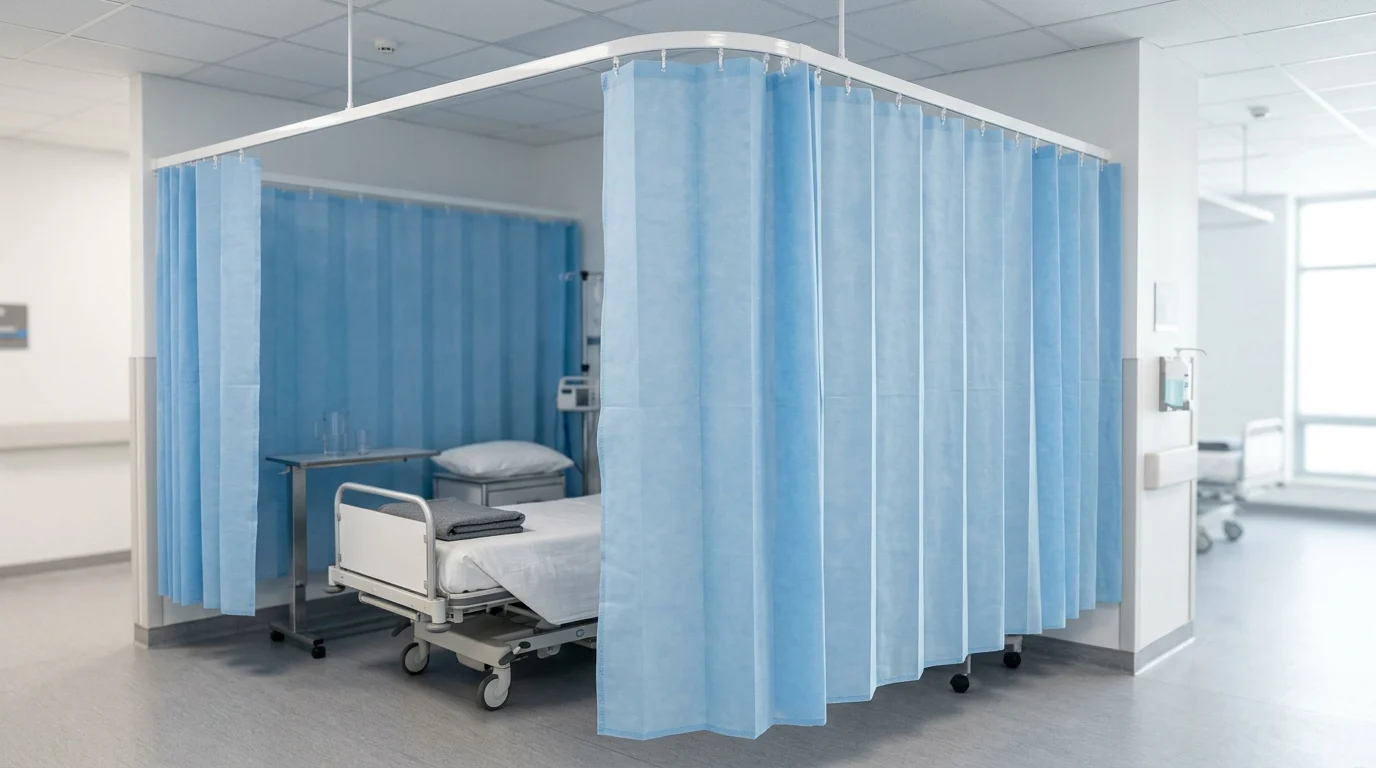
Hospital Privacy Curtains are no longer a low-priority textile purchase; they are becoming a measurable part of infection control, compliance, and cost management. As healthcare facilities prepare for 2026, procurement teams are weighingsingle-use polypropylene curtains, RFID or QR-based replacement tracking, ESG expectations, and the true cost of laundering versus disposal. The shift is driven by practical pressures: reducing cross-contamination risk, improving audit readiness, and simplifying environmental services workflows. This article examines the market forces, material specifications, replacement cycles, sustainability trade-offs, and supplier criteria that matter most when evaluating Disposable curtain programs for modern clinical environments.
Why Disposable Hospital Curtains Matter in Procurement
The procurement landscape for healthcare textiles is undergoing a fundamental shift, prioritizing infection control and operational predictability. Facility managers and procurement officers are increasingly transitioning away from traditional laundering models toward single-use alternatives to mitigate cross-contamination risks and streamline inventory management.
Looking toward 2026, near-term forecasts suggest that reliance on automated tracking and strict environmental, social, and governance (ESG) criteria will transform how healthcare networks source privacy solutions. Evaluating these products requires a deep understanding of material science, lifecycle economics, and emerging market demands, balancing current verified trends with future sustainability goals.
How to Define Disposable Hospital Curtains in 2026
In the current healthcare environment, Disposable Hospital Curtains are engineered as highly technical, single-use privacy barriers. Modern iterations are predominantly manufactured from 100% non-woven polypropylene (PP), typically specified at a density of 100 to 120 grams per square meter (GSM). This specific weight provides optimal opacity for patient privacy while maintaining a lightweight profile that reduces strain on existing ceiling track systems.
Furthermore, industry analysts project that by 2026, standard specifications will increasingly mandate the integration of smart inventory technologies. Many premium curtains already feature embedded RFID tags or QR-coded audit labels, allowing environmental services teams to track exact installation dates and automate replacement schedules. Standard replacement protocols dictate a lifecycle of 3 to 6 months per panel, depending on ward risk levels, ensuring a continuous standard of hygiene without the logistical overhead of fabric laundering.
Market Trends Shaping Demand
The global market for single-use privacy solutions is experiencing robust growth, expanding at an illustrative compound annual growth rate (CAGR) of approximately 6.5%, subject to regional market variations. However, this shift introduces significant environmental considerations. Where specialized healthcare-plastics recycling is unavailable, single-use PP models explicitly increase local landfill or incineration burdens compared to laundered reusables. As sustainability mandates tighten, manufacturers are pivoting toward technically recyclable polypropylene matrices. This allows Medical Curtains to be processed into secondary plastic goods post-use—provided the facility has access to the necessary recycling infrastructure.
Economically and clinically, this demand is driven by the urgent need to combat Healthcare-Associated Infections (HAIs). Illustrative clinical estimates suggest that replacing traditional textiles with antimicrobial disposable variants can reduce surface-level pathogen transmission rates by up to 30% in high-acuity environments, pending facility-specific validation. Simultaneously, hypothetical supply chain analyses estimate potential operational savings of up to $4.50 per curtain cycle by eliminating laundering, transport, and labor costs, though these figures require validation based on local utility rates.
How to Compare Disposable and Reusable Curtains
Transitioning a healthcare facility's privacy infrastructure requires a rigorous comparative analysis between traditional woven textiles and modern synthetic alternatives. Procurement teams must evaluate not only the upfront unit costs but also the hidden expenditures associated with maintenance, compliance auditing, infection-related liabilities, and increased plastic waste-disposal volumes.
Key Supplier Specification Criteria
When standardizing a procurement contract, mapping out the total cost of ownership is critical. While reusable fabrics present a higher initial capital expenditure, their ongoing maintenance costs often eclipse the predictable operational expenditure of single-use models. Below is a comparative breakdown based on illustrative industry estimates; these figures serve as representative baselines and require supplier-specific validation. These ranges assume standard 7.5-foot drop panels, bi-annual replacement cycles, and average regional labor rates; actual costs will vary significantly based on local waste disposal fees, recycling access, and environmental compliance costs.
| Specification / Metric | Single-Use Hospital Curtains | Traditional Reusable (Fabric) Curtains |
|---|---|---|
| Initial Acquisition Cost | $12.00 - $18.00 per panel | $45.00 - $75.00 per panel |
| Maintenance Cost | $0.00 (Dispose/Recycle) | $3.50 - $5.00 per wash cycle |
| Standard Replacement Cycle | 3 to 6 months | 12 to 24 months (with frequent washing) |
| Cross-Contamination Risk | Extremely Low (<1% retention via swab tests) | Moderate to High (if laundering is delayed) |
| Weight per Panel | 0.8kg - 1.2kg | 2.5kg - 4.0kg |
This data underscores the financial viability of single-use solutions in high-turnover or high-risk wards. By eliminating commercial laundry contracts and reducing the labor hours required to manage heavy fabric curtains, hospitals can reallocate facility management budgets directly toward patient care. However, reusable laundered textiles may still be cost-effective and clinically appropriate in lower-acuity outpatient settings where contamination risks are minimal and waste-disposal costs for single-use plastics outweigh the benefits.
Materials, Antimicrobial Treatment, and Flame Resistance
The technical performance of disposable privacy screens hinges on advanced material engineering. High-quality polypropylene must be treated with active antimicrobial agents during the extrusion process rather than merely surface-coated. Embedding silver-ion technology directly into the polymer ensures a sustained log reduction, which illustrative laboratory benchmarks suggest can theoretically exceed 99.9% against MRSA and E. coli within a 24-hour contact period. It is important to note that antimicrobial treatments are supplementary and do not replace routine facility cleaning protocols. Furthermore, in the United States, any antimicrobial efficacy claims require explicit EPA registration.
Equally critical is strict adherence to international fire safety standards. Procurement specifications must require intrinsic flame retardancy that will not degrade over the product's lifespan. Validated products must pass stringent tests, such as NFPA 701 in North America or BS 5867 Part 2 Type C in Europe. Curtains failing to meet these maximum flame spread index thresholds pose unacceptable liabilities in clinical settings.
Compliance, Sourcing, and Supplier Evaluation
Securing a reliable supply chain for clinical consumables demands thorough vetting of manufacturing partners. As regulatory frameworks governing medical environments grow more complex, suppliers must demonstrate not only high-volume production capabilities but also flawless adherence to global quality management standards.
Regulatory and Hygiene Requirements
Supplying Hospital Curtains to enterprise-level healthcare networks requires strict regulatory alignment. Crucially, procurement teams must distinguish between disposable curtains classified as general healthcare furnishings and those regulated as medical devices. They are typically not classified as FDA or CE medical devices unless specific clinical claims are made.
Key Takeaways
- Specify disposable curtains at 100 to 120 GSM when balancing patient privacy, durability, and reduced strain on existing ceiling tracks.
- Use a 3-to-6-month replacement protocol and adjust it by ward risk level to support consistent hygiene standards.
- Evaluate total cost of ownership by including laundering, transport, labor, compliance auditing, disposal, and infection-control workflow costs.
- Prioritize RFID tags or QR-coded labels if your facility needs automated installation tracking and replacement scheduling by 2026.
- Assess local recycling capacity before selecting polypropylene Single-use curtains, because sustainability outcomes depend on available healthcare-plastics infrastructure.
- Validate any claimed infection-control or cost-saving benefits against facility-specific data, including HAI risk, utility rates, labor costs, and waste-management fees.
Frequently Asked Questions
What are disposable hospital curtains typically made from?
Most modern disposable hospital curtains are made from 100% non-woven polypropylene, often specified at 100 to 120 GSM to balance opacity, durability, and low track-system load.
How often should disposable hospital curtains be replaced?
A common replacement cycle is every 3 to 6 months per panel, depending on ward risk level, infection-control policy, and whether RFID or QR audit tracking is used.
Why are hospitals switching from reusable to disposable curtains?
Hospitals are adopting disposable curtains to reduce laundering logistics, improve change-out consistency, support infection-control protocols, and create more predictable procurement and inventory workflows.
Can disposable hospital curtains help reduce infection risk?
They can support infection-control programs by reducing textile handling and enabling scheduled replacement. Some estimates suggest antimicrobial disposable variants may reduce surface-level pathogen transmission by up to 30% in high-risk settings.
Are disposable hospital curtains recyclable?
Some polypropylene curtains are technically recyclable, but actual recycling depends on local healthcare-plastics infrastructure, contamination rules, and supplier take-back or processing arrangements.