

 Send Email
 whatsapp


Introduction
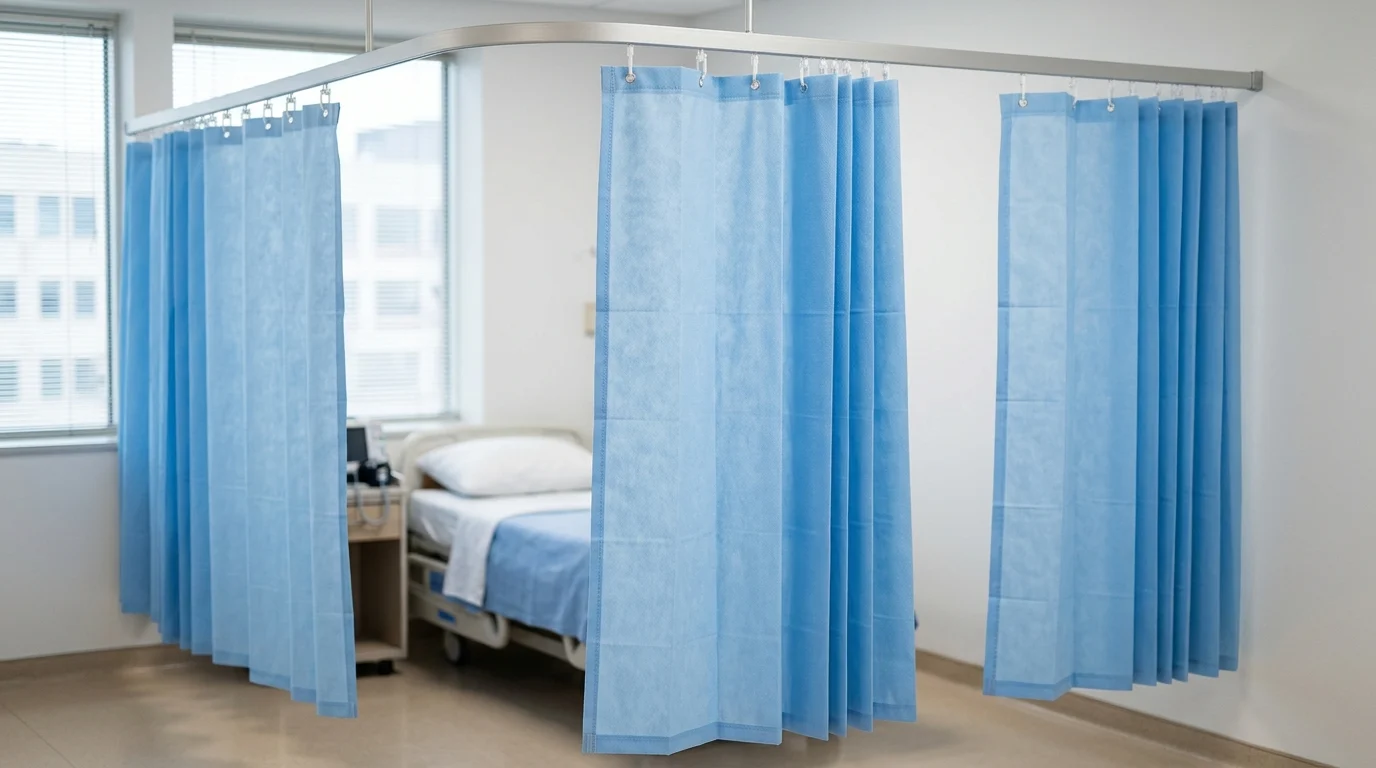
Privacy Curtains are touched constantly but cleaned far less often than other surfaces in patient areas, making them an underestimated source of pathogen transfer. Disposable hospital curtains help close that gap by replacing a reusable fabric with a single-use barrier that can be changed quickly, consistently, and without the delays of laundering. This article explains how that shift reduces cross-contamination risk, where disposable curtains fit within broader infection prevention protocols, and what healthcare facilities should consider when evaluating them for patient safety, workflow efficiency, and environmental hygiene.
Why Disposable Hospital Curtains Matter for Infection Prevention
Healthcare-associated infections (HAIs) represent a persistent threat to patient safety and facility operational budgets. Within the clinical environment, high-touch surfaces act as primary vectors for pathogen transmission. While strict protocols govern the sterilization of medical instruments and hard surfaces, soft surfaces like Hospital Privacy Curtains have historically been overlooked. These partitions surround the patient zone, enduring frequent handling by healthcare workers, patients, and visitors without immediate disinfection between interactions.
The shift toward single-use alternatives addresses a critical gap in environmental hygiene. By eliminating the complex logistics of laundering and the inherent degradation of textile barriers, healthcare facilities can establish a more controlled and predictable infection prevention baseline.
How disposable curtains reduce cross-contamination
Traditional textile partitions frequently act as fomites. Clinical studies indicate that up to 92% of freshly laundered reusable curtains become colonized with bacteria, including Methicillin-resistant Staphylococcus aureus (MRSA) and Vancomycin-resistant Enterococci (VRE), within just 14 days of installation. Pathogens can survive on standard polyester fabrics for up to 90 days, facilitating continuous cross-contamination as staff move between the curtain and the patient.
Implementing Single-Use Hospital Curtains systematically breaks this chain of transmission. Many of these products are manufactured with built-in antimicrobial agents, such as silver-ion technology, which actively reduce surface bioburden by over 99.9% within 24 hours. Because they are replaced rather than washed, the risk of pathogen accumulation over extended lifecycles is fundamentally eliminated.
What clinical and operational factors drive adoption
Beyond clinical outcomes, operational efficiency significantly influences the transition to disposable variants. Traditional curtain management is highly labor-intensive; removing, laundering, and reinstalling a standard curtain typically requires 15 to 20 minutes of labor, often necessitating ladders and multiple facility management personnel. This downtime directly impacts room turnaround metrics.
Conversely, modern disposable systems utilize specialized track glides or snap-on mechanisms that allow a single staff member to execute a complete changeout in 2 to 3 minutes without a ladder. This 85% reduction in change time is a compelling driver for adoption, particularly amid chronic healthcare staffing shortages. Furthermore, the financial penalties associated with HAIs under value-based purchasing programs compel administrators to invest in proactive environmental controls that yield measurable reductions in infection rates.
How to Compare Disposable and Reusable Hospital Curtains

Transitioning from traditional textiles to disposable alternatives requires a comprehensive evaluation of lifecycle economics, regulatory compliance, and logistical impact. Facilities must weigh the recurring procurement costs of single-use items against the hidden expenditures associated with maintaining a reusable inventory.
Which performance, compliance, and cost criteria matter most
When evaluating performance, procurement teams must analyze total cost of ownership (TCO). Standard reusable curtains carry an initial acquisition cost of $30 to $50 per unit, coupled with recurring laundering and transportation fees averaging $5 to $10 per cycle. In contrast, high-quality disposable alternatives typically cost between $10 and $15 per unit. While disposables represent a continuous consumable expense, they eliminate commercial laundry contracts, inventory loss, and fabric repair costs.
| Evaluation Metric | Disposable Partitions | Reusable Textiles |
|---|---|---|
| Initial Unit Cost | $10 - $15 | $30 - $50 |
| Recurring Processing Cost | $0 (Disposal only) | $5 - $10 per wash cycle |
| Average Change Time | 2 - 3 minutes | 15 - 20 minutes |
| Pathogen Survival Risk | Low (Antimicrobial treated) | High (Colonized within 14 days) |
| Fire Retardancy | Inherent (100% consistent) | Degrades after 10-15 washes |
Compliance also drives selection. Anti-Microbial Hospital Curtains must meet stringent international standards for both biocidal efficacy (e.g., ISO 20743) and structural integrity, ensuring they perform reliably under clinical stress.
How change frequency, laundry handling, and fire safety affect selection
Change frequency protocols dictate the volume and logistics of curtain management. High-risk environments, such as isolation wards or burn units, require immediate curtain replacement upon patient discharge. In these settings, the rapid turnaround of disposable options prevents bottlenecks. For standard wards, facilities typically establish a scheduled changeout frequency ranging from every 3 to 6 months, easily tracked via integrated date labels on disposable units.
Fire safety is another non-negotiable parameter. Healthcare partitions must comply with strict flammability standards, such as NFPA 701 in the United States or BS 5867 in the UK. Reusable curtains are chemically treated for flame resistance, but this protection degrades progressively; after 10 to 15 wash cycles, a reusable curtain may fail compliance testing, creating a severe liability. Disposable curtains are manufactured from inherently flame-retardant (IFR) non-woven polypropylene, guaranteeing 100% compliance out of the box without the variable of wash-induced degradation.
What to Consider When Purchasing and Implementing Disposable Hospital Cu
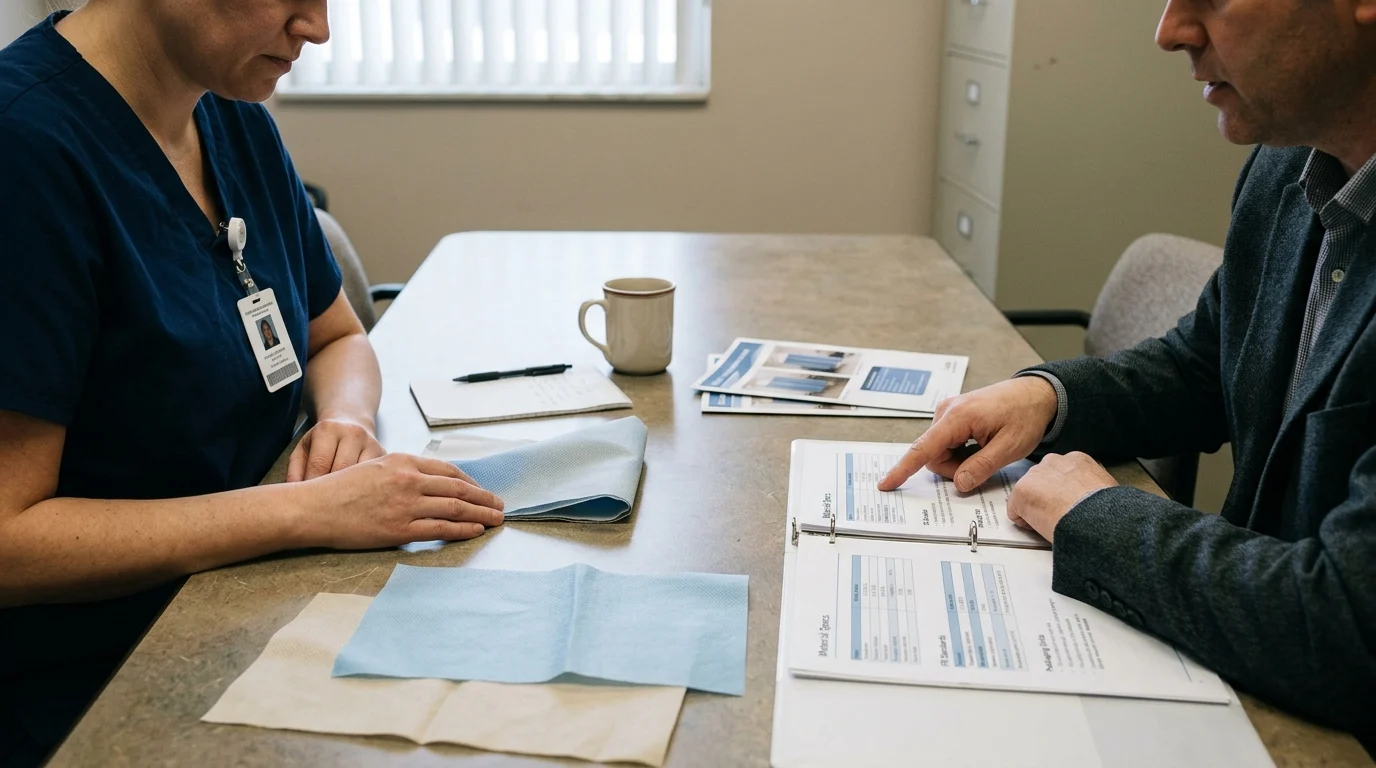
Successful integration of disposable partitions requires rigorous vendor evaluation and a structured deployment strategy. Procurement departments must ensure that the selected products align with existing facility infrastructure while meeting the clinical demands of various specialized departments.
Which product specifications and supplier capabilities to evaluate
Technical specifications dictate both clinical efficacy and regulatory compliance. Evaluators should mandate the use of 100 to 120 gsm (grams per square meter) non-woven polypropylene, which provides optimal opacity for patient privacy while maintaining high tensile strength to resist tearing. Additionally, building codes require fire sprinkler penetration; therefore, Medical Curtains must feature a top mesh layer—typically 20 to 22 inches in depth—with specific diagonal hole sizing to allow unobstructed water flow.
Supplier capabilities are equally critical. Healthcare supply chains demand reliability. Procurement officers should assess vendors based on Minimum Order Quantities (MOQs), which often range from 500 to 1,000 units for custom dimensions, and historical lead times, which should not exceed 4 to 6 weeks. Furthermore, verifying that the manufacturer holds an ISO 13485 certification ensures that the supplier adheres to stringent quality management systems specific to medical devices.
How to plan rollout and use across care settings
A phased implementation strategy minimizes disruption and allows for workflow optimization.
Key Takeaways
- The most important conclusions and rationale for Disposable Hospital Curtains
- Specs, compliance, and risk checks worth validating before you commit
- Practical next steps and caveats readers can apply immediately
Frequently Asked Questions
How do disposable hospital curtains reduce cross-contamination?
They remove the need for repeated laundering and replacement delays. Single-use curtains are changed out entirely, reducing pathogen buildup on high-touch fabric near the patient zone.
How often should disposable hospital curtains be replaced?
Replace them immediately after isolation cases or patient discharge in high-risk areas. In standard wards, many facilities use a scheduled change cycle of about 3 to 6 months.
Are disposable hospital curtains faster to change than reusable ones?
Yes. Disposable systems with snap-on or glide tracks can often be changed by one person in 2 to 3 minutes, compared with 15 to 20 minutes for reusable curtains.
What should buyers check before choosing disposable hospital curtains?
Review antimicrobial performance, fire-retardant compliance, track compatibility, unit cost, and labeling for change dates. Total cost should include labor savings and avoided laundry expenses.
Can disposable hospital curtains help lower overall operating costs?
Often yes. Although they are a recurring purchase, they can cut laundry fees, reduce labor time, simplify inventory management, and support faster room turnover.