

 Send Email
 whatsapp


Introduction
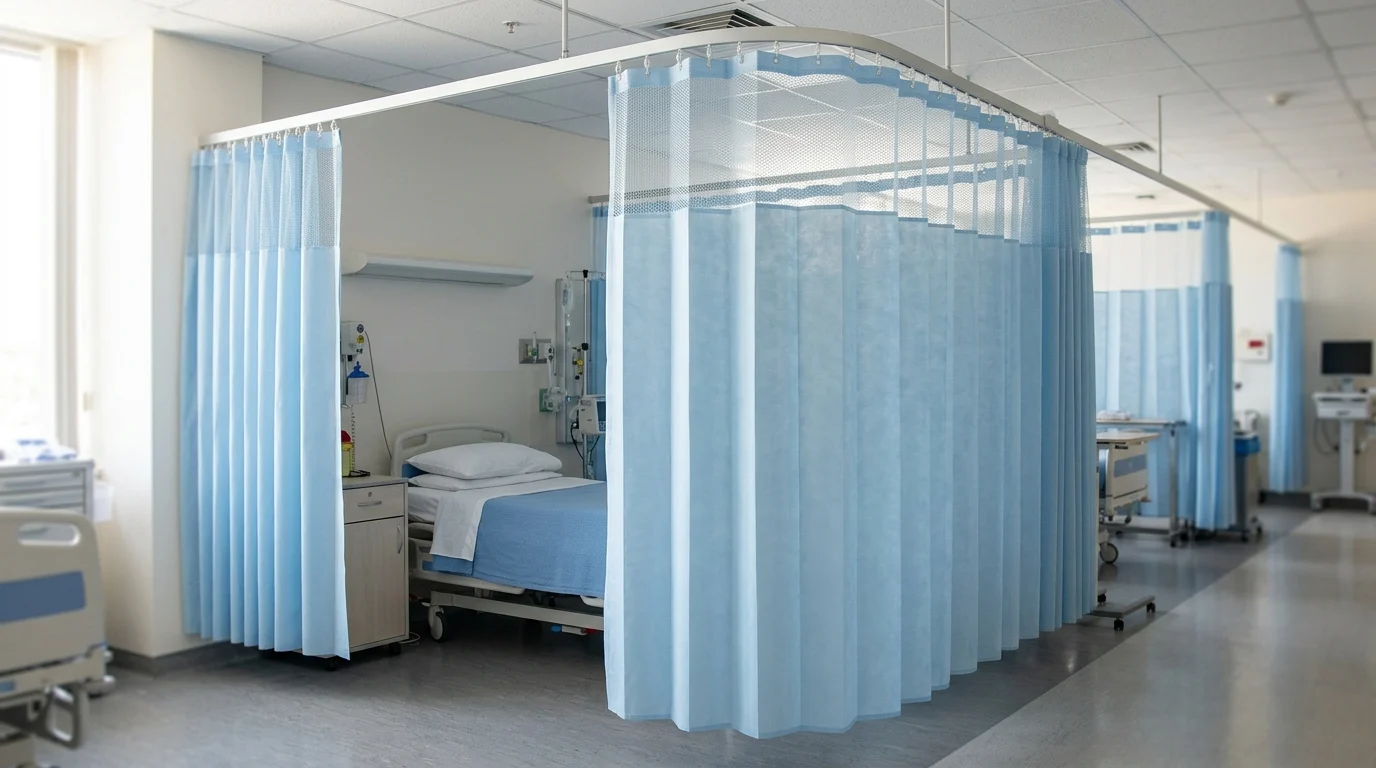
Hospitals are under constant pressure to reduce infection risks, maintain patient privacy, and keep rooms turning over efficiently. Disposable Medical Curtains address all three needs by eliminating the laundering cycle, limiting cross-contamination from reused fabrics, and allowing fast replacement between patients or after exposure events. They also simplify maintenance for busy clinical teams while supporting consistent hygiene standards across wards. Understanding why facilities are moving away from traditional textile curtains shows how a small design choice can have a direct impact on safety, workflow, and overall hospital operations.
Why Hospitals Choose Disposable Medical Curtains
The transition from traditional laundered textiles to disposable medical curtains represents a fundamental shift in clinical facility management. Driven by stringent healthcare-associated infection (HAI) protocols and the need for rapid room turnover, hospital administrators increasingly prioritize single-use solutions. This shift directly addresses the vulnerabilities of reusable fabrics, which often act as passive vectors for pathogen transmission in high-acuity environments while consuming significant operational resources during the laundering cycle.
How do disposable curtains support infection control and privacy
Clinical evidence consistently demonstrates that traditional privacy screens can harbor multidrug-resistant organisms, such as MRSA, VRE, and Clostridioides difficile, for up to 14 days. By implementing Hospital Privacy Curtains, facilities eliminate this transmission vector entirely. Modern single-use options incorporate built-in antimicrobial agents, typically relying on silver-ion or quaternary ammonium treatments extruded directly into the polymer. These treatments actively reduce surface bacterial loads by up to 99.9% within hours of contact, providing a continuous biocidal effect. Furthermore, these non-woven textiles are engineered to provide equivalent or superior opacity compared to woven cotton blends, ensuring patient dignity and strict compliance with privacy mandates without blocking ambient overhead lighting.
What operational advantages do disposable curtains offer
Beyond robust infection control, the operational logistics of single-use textiles radically streamline environmental services (EVS) workflows. Removing, bagging, and reinstalling a traditional fabric curtain often requires ladder access and can take maintenance staff up to 10 minutes per bed space. Conversely, disposable alternatives feature standardized eyelets, integrated mesh headers, and quick-release hook systems, allowing EVS personnel to execute a complete changeout in under 60 seconds. This 90% reduction in labor time directly accelerates bed turnover rates, a critical operational metric for emergency departments and intensive care units that frequently operate at 85% to 95% capacity.
How to Evaluate Disposable Medical Curtains

Transitioning to a Single-use curtain model requires rigorous evaluation of material specifications, safety compliance, and total cost of ownership. Procurement teams must look beyond unit pricing to assess how specific non-woven polymers perform under clinical stress and integrate into existing facility management frameworks.
Which material, fire-safety, and antimicrobial criteria matter most?
The industry standard for high-performance Disposable Hospital Curtains is 100% spunbond polypropylene (PP), typically specified at a density of 100 to 120 grams per square meter (gsm). This density threshold ensures the fabric resists tearing during rapid deployment while maintaining sufficient drape and structural integrity. Fire safety is a non-negotiable criterion; acceptable products must carry certifications demonstrating compliance with stringent flammability standards, such as NFPA 701 in the United States or BS 5867 Part 2 Type C in the United Kingdom. Additionally, the antimicrobial efficacy must be validated by independent laboratory testing (e.g., ISO 20743 or AATCC 100), ensuring the active biocidal agents do not leach out and remain stable throughout the curtain's intended deployment period.
How do cost, lifecycle, and replacement frequency affect value
Evaluating the financial viability of Disposable curtains requires a lifecycle cost analysis comparing acquisition, maintenance, and labor overhead against traditional alternatives.
| Economic Metric | Traditional Woven Curtains | Disposable Non-Woven Curtains |
|---|---|---|
| Initial Acquisition Cost | $40.00 – $80.00 per unit | $10.00 – $25.00 per unit |
| Laundering / Processing | $5.00 – $10.00 per cycle | $0.00 (Single-use) |
| Antimicrobial Efficacy | Degrades significantly after 20 washes | Sustained continuously for 3–6 months |
| Changeout Labor Time | 5.00 – 10.00 minutes | < 1.00 minute |
While traditional curtains require a higher upfront capital expenditure and ongoing utility costs for thermal disinfection, disposables operate on a predictable operating expense (OpEx) model. Depending on the ward's infection risk profile, replacement frequencies for disposables range from every 3 months in general wards to every 7 days in high-risk isolation units. When factoring in the elimination of laundering logistics and reduced EVS labor, hospitals typically realize a 15% to 30% reduction in total annual curtain expenditure.
How to Source and Implement Disposable Medical Curtains
Successful implementation of disposable privacy screens depends on aligning procurement strategies with clinical workflows and waste management protocols. A seamless rollout ensures that the theoretical benefits of single-use textiles translate into measurable improvements in facility hygiene and EVS efficiency.
What procurement, installation, and disposal steps improve performance?
Strategic sourcing begins with identifying a reliable Medical Curtains Manufacturer capable of meeting institutional volume requirements, which often involve Minimum Order Quantities (MOQs) ranging from 500 to 2,000 units per hospital wing. Procurement teams must audit track compatibility; curtains should be specified with universal U-hooks or snap-fit eyelets that glide smoothly on existing aluminum ceiling tracks without retrofitting. From a waste management perspective, uncontaminated polypropylene curtains are 100% recyclable under standard Type 5 plastics protocols. Facilities should establish clear triage guidelines: curtains visibly soiled with blood or bodily fluids must be incinerated as regulated clinical waste, while unsoiled units removed during routine scheduled changeouts can be diverted to polymer recycling programs, thereby mitigating the environmental footprint of single-use plastics.
Where do disposable curtains deliver the most benefit
While facility-wide adoption is the ultimate goal for many health systems, targeted deployment in high-acuity zones yields the highest immediate return on investment. Emergency departments, burn units, intensive care units (ICUs), and oncology wards represent the primary environments where rapid turnover and uncompromising infection control are paramount. In a Level 1 trauma center, for example, a trauma bay curtain may require changing multiple times within a 24-hour period. Utilizing disposable Hospital Cubicle Curtains in these specific high-turnover areas eliminates the bottleneck of waiting for clean linen deliveries. By mapping curtain replacement protocols to the specific infection risk tiers of different departments, clinical administrators can optimize their inventory burn rate, ensuring maximum patient protection precisely where the clinical data dictates it is most critical.
Key Takeaways
- The most important conclusions and rationale for Disposable Medical Curtains
- Specs, compliance, and risk checks worth validating before you commit
- Practical next steps and caveats readers can apply immediately
Frequently Asked Questions
Why do hospitals prefer disposable medical curtains?
They reduce infection risk, speed up room turnover, and cut laundry-related labor and costs. Single-use curtains also help facilities maintain privacy without relying on reusable fabrics that can harbor pathogens.
How do disposable medical curtains improve infection control?
They eliminate the need to reuse fabric that may carry MRSA, VRE, or C. difficile. Many versions also include antimicrobial treatments that help reduce surface bacteria during use.
Do disposable hospital curtains still provide patient privacy?
Yes. Modern non-woven designs are made to be opaque enough for privacy while still allowing ambient light through, helping meet patient dignity requirements.
What material should buyers look for in disposable curtains?
Look for 100% spunbond polypropylene, usually around 100–120 gsm, for durability and drape. Also verify fire-safety compliance and independent antimicrobial testing.
How often should disposable medical curtains be replaced?
Replacement depends on risk level. General wards may change them every 3 months, while high-risk isolation areas may need replacement as often as every 7 days.