

 Send Email
 whatsapp


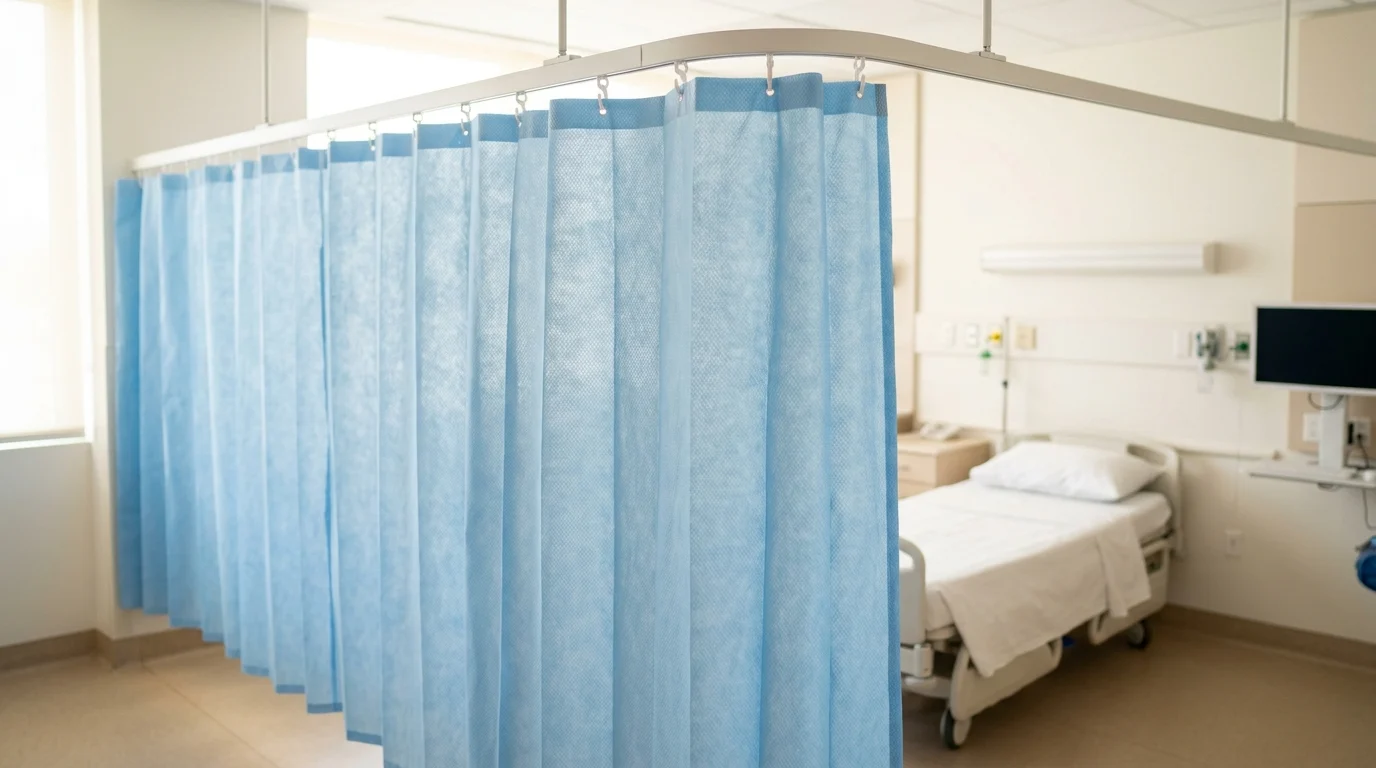
A bedside curtain may look harmless, but in a busy ward it can become one of the most frequently touched surfaces around the patient. Staff pull it during examinations, patients move it for privacy, and visitors often handle the same leading edge—sometimes dozens of times a day. That repeated contact creates a practical infection-control problem, especially when organisms such as MRSA, VRE, or C. difficilecan persist on surfaces. This article examines how disposable Cubicle Curtains become contaminated, what materials and antimicrobial features matter, and how facilities should weigh replacement schedules, waste handling, and lifecycle costs against reusable fabric systems.
Why Disposable Hospital Curtains Are High-Risk Contact Surfaces
Healthcare environments present complex challenges for infection prevention, and Hospital Curtains are increasingly recognized as significant vectors for pathogen transmission. Because they are frequently handled but rarely sanitized between patient encounters, these partitions act as high-risk contact surfaces within the patient zone.
Clinical studies and environmental swabs routinely demonstrate the vulnerability of these barriers. Research indicates that standard hospital privacy screens can harbor hazardous pathogens, such as Methicillin-resistant Staphylococcus aureus (MRSA) and Vancomycin-resistant Enterococcus (VRE), within just 14 days of installation. Left unchecked, these microbial colonies transform a simple privacy measure into a persistent environmental hazard.
What Defines Disposable Hospital Curtains
Modern Disposable Privacy Curtains are typically manufactured from non-woven polypropylene. While the base material is technically capable of being recycled, it is important to note that once contaminated in a clinical setting, these biohazardous textiles are typically incinerated or landfilled as clinical waste rather than recycled into new materials. To balance physical durability with cost-effectiveness, these synthetic materials usually feature a fabric weight between 100 and 120 grams per square meter (GSM). This specific density ensures the curtain hangs correctly while resisting accidental tears during rapid bed movements.
Unlike traditional woven fabrics, the non-woven structure provides a smooth, inherently fluid-resistant barrier that limits the deep absorption of biological fluids. Furthermore, many advanced disposable variants are embedded with manufacturer-specific silver-ion or quaternary ammonium antimicrobial treatments during the extrusion process, which are designed to actively inhibit bacterial proliferation on the surface over the product's lifespan.
Key Contamination Pathways
The primary contamination pathway for any cubicle partition is direct tactile transfer. Healthcare workers, patients, and visitors frequently grasp the leading edges of the fabric to open or close the barrier around a bed. In high-traffic environments such as intensive care units or emergency departments, observational audits estimate that a single curtain edge may experience upwards of 40 to 50 hand contacts per day.
Without rigorous hand hygiene interventions immediately before and after touching the fabric, bacteria easily transfer from contaminated gloves or bare hands to the material. Because pathogens like C. difficile spores have been shown to survive on dry inorganic surfaces for up to five months, the curtain becomes a continuous reservoir, threatening to contaminate the hands of the next clinical staff member who adjusts the screen.
Disposable vs Reusable Hospital Curtains
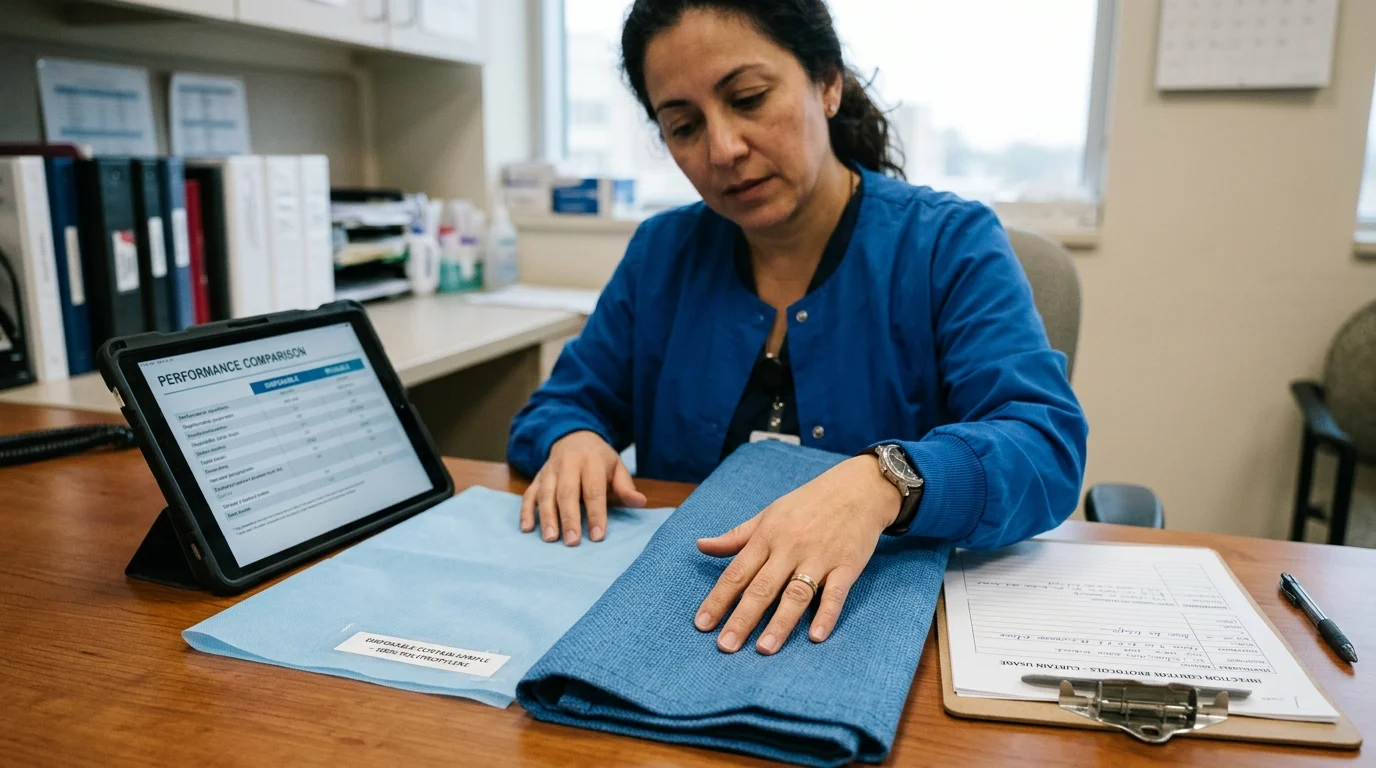
Evaluating the transition from traditional fabric to disposable alternatives requires a comprehensive lifecycle cost-per-use analysis, factoring in replacement frequency, durability, and laundering burdens, rather than simply comparing initial unit purchase prices. While reusable textiles have been the historical standard in patient wards, the hidden costs of laundering and the elevated risk of cross-contamination have prompted a rapid industry shift toward single-use solutions.
Maintaining launderable curtains demands significant utility resources. Industry estimates suggest a standard reusable curtain can cost between $15 and $30 per laundering cycle when accounting for water consumption, thermal energy (requiring 60°C or higher temperatures for thermal disinfection), and the procurement of specialized chemical detergents.
Key Comparison Criteria
When comparing these two primary partition types, hospital administrators must weigh material science against logistical realities. The following table outlines the fundamental operational and economic differences between single-use and launderable Hospital Cubicle Curtains.
| Criteria | Disposable curtains | Reusable Curtains |
|---|---|---|
| Material Structure | Non-woven polypropylene (100-120 GSM) | Woven polyester/cotton blend |
| Infection Risk | Low (replaced periodically or when soiled) | High (can harbor bacteria between washes) |
| Maintenance Overhead | None (discarded as clinical waste; typically incinerated) | High (requires high-temp laundering facilities) |
| Labor Time | 3-5 minutes to replace | 20-30 minutes to remove, wash, and rehang |
| Lifecycle Cost | Lower overall (factors in $5-$15 unit cost and zero laundering) | Higher overall (factors in $40-$80 unit cost plus continuous laundering) |
Cost, Hygiene, and Workflow Differences
The financial and workflow impacts of switching to single-use partitions extend far beyond the purchasing department. Traditional fabric screens require significant manual labor; removing, transporting, washing, ironing, and rehanging a single curtain can consume an estimated 20 to 30 minutes of environmental services staff time. This process often leaves a bed bay unshielded and out of commission for hours.
In contrast, disposable alternatives utilize quick-release hooks, snap-fit eyelets, or integrated track glides that allow personnel to swap a unit in under five minutes. This estimated 83% reduction in changeover time drastically improves room turnover rates. Additionally, eliminating the heavy laundering infrastructure reduces overall hospital utility consumption and minimizes the release of chemical wastewater into municipal systems.
Key Takeaways
- Treat disposable hospital curtains as high-touch surfaces because curtain edges may receive 40 to 50 hand contacts per day in busy units.
- Replace or monitor curtains proactively, as MRSA and VRE can be detected on hospital privacy curtains within about 14 days of installation.
- Choose non-woven polypropylene curtains in the 100–120 GSM range when balancing durability, tear resistance, and cost-effective replacement.
- Do not rely on antimicrobial additives alone, because hand hygiene and scheduled curtain changes remain essential for infection prevention.
- Factor laundering costs of $15–$30 per cycle and 60°C thermal disinfection requirements when comparing reusable curtains with disposable alternatives.
- Handle used disposable curtains as clinical waste when contaminated, even if the original polypropylene material is technically recyclable.
Frequently Asked Questions
Why are disposable hospital curtains considered high-risk contact surfaces?
They are touched frequently by staff, patients, and visitors but are not always cleaned between contacts, allowing pathogens to accumulate on curtain edges within the patient zone.
How quickly can hospital curtains become contaminated?
Studies have found that privacy curtains can harbor pathogens such as MRSA and VRE within about 14 days of installation, especially in busy clinical areas.
What materials are disposable hospital curtains usually made from?
Most are made from non-woven polypropylene, often around 100–120 GSM, which provides durability, fluid resistance, and enough structure to hang properly.
Can disposable cubicle curtains be recycled?
The base polypropylene may be recyclable, but once used in clinical settings and potentially contaminated, curtains are usually handled as clinical waste and incinerated or landfilled.
How do pathogens transfer onto hospital privacy curtains?
The main route is hand contact. Staff, patients, or visitors touch the curtain while opening or closing it, transferring organisms from hands, gloves, or nearby surfaces.