

 Send Email
 whatsapp


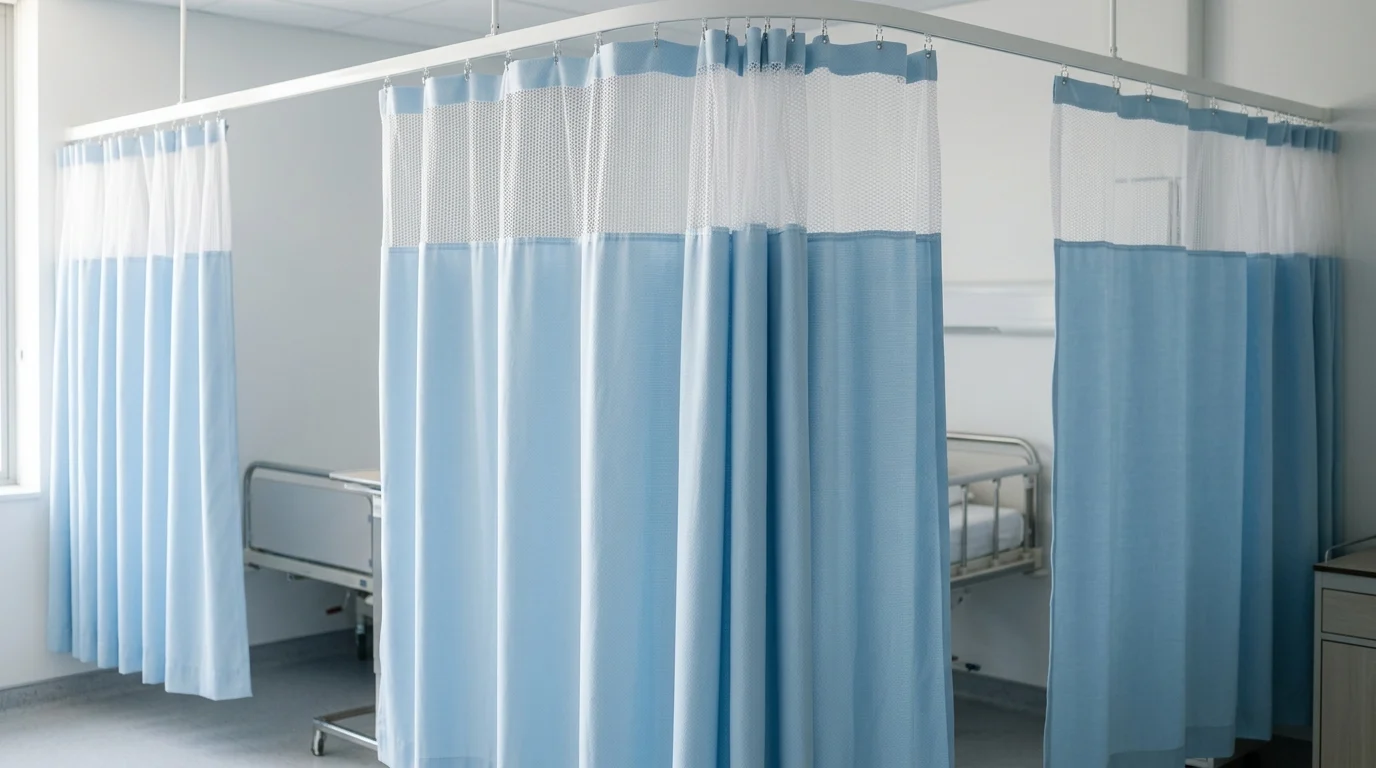
Minutes matter when a room is waiting for the next patient. In busy hospitals, even a small delay in environmental services workflows can affect ED boarding, bed availability, patient satisfaction, and revenue. One often-overlooked factor is the privacy curtain: a heavy reusable textile can take 10 to 15 minutes to remove and replace, while modern disposable Cubicle Curtains with quick-release systems can dramatically shorten that step. This article examines howdisposable hospital curtains fit into room turnover strategy, where they deliver the strongest operational gains, and what administrators should weigh before replacing laundered curtains across a facility.
How Disposable Hospital Curtains Improve Room Turnover
Efficient room turnover is critical for healthcare facilities managing high patient volumes. Transitioning from traditional fabric to disposable hospital curtains directly addresses this operational bottleneck by eliminating the complex logistics of laundering, tracking, and re-hanging.
How Disposable Curtains Reduce Cleaning Time
Standard fabric curtains require a multi-step removal, bagging, laundering, and re-installation process that disrupts room availability. In contrast, disposable hospital curtains are designed for rapid changeovers. Environmental services (EVS) teams can typically unhook, dispose of, and replace these curtains in under five minutes. According to environmental infection control guidelines from institutions like the Centers for Disease Control and Prevention (CDC), minimizing the handling and transport of contaminated textiles reduces the risk of cross-contamination. By bypassing the laundry cycle entirely, facilities eliminate transport delays and immediately prep the room for the next admission.
| Process Metric | Traditional Fabric Curtains | Disposable Hospital Curtains |
|---|---|---|
| Changeover Time | 15–20 minutes (plus laundry transit) | 3–5 minutes |
| Workflow Steps | Remove, bag, transport, wash, dry, re-hang | Remove, discard, snap/hook new curtain |
| Labor Dependency | High (EVS and external laundry staff) | Low (EVS staff only) |
Where Faster Curtain Changes Support Patient Flow
Accelerated room readiness is particularly vital in high-acuity and fast-paced medical departments where delays directly impact patient care.
- Emergency Departments (ED): Rapid patient triage, discharge, and admission require immediate environmental resets. Quick-change hospital curtains prevent bed-blocking during peak surge periods.
- Intensive Care Units (ICU): Strict infection control protocols mandate frequent curtain replacements, especially for isolation rooms. Disposables allow for immediate compliance without leaving a patient bay exposed while waiting for clean linens to arrive from the laundry facility.
- Outpatient Surgical Centers: High daily case volumes rely on predictable, swift room turnovers to maintain tight surgical schedules and maximize facility throughput.
By streamlining environmental cleaning protocols, disposable hospital curtains ensure that clinical spaces remain safe, compliant, and continuously available for incoming patients.
Disposable vs Laundered Hospital Curtains
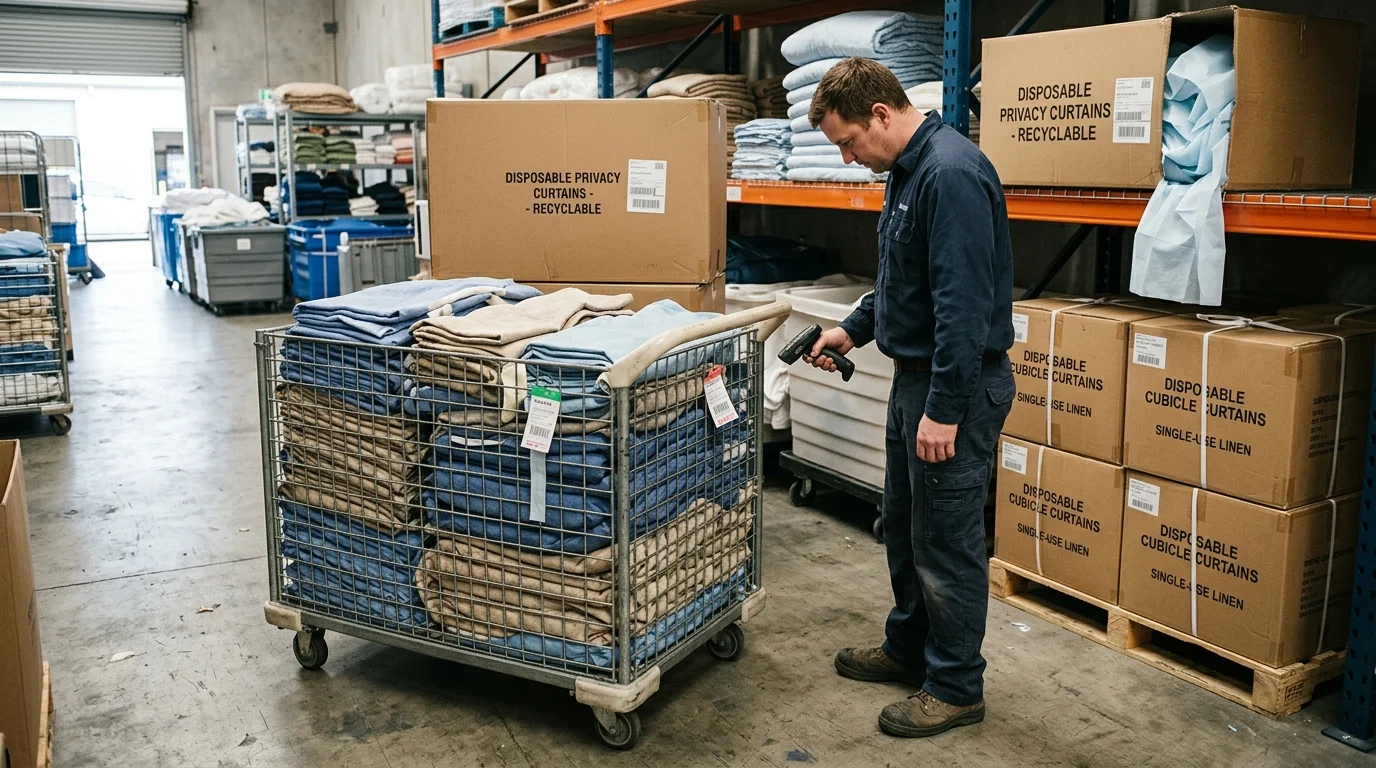
The transition from reusable textiles to single-use alternatives represents a fundamental shift in healthcare logistics. Administrators must weigh the upfront material costs against the long-term expenses of laundering, labor, and infection control management, while also factoring in environmental impacts and supply-chain dependencies. A robust contingency plan is essential; facilities must assess the operational risk of delayed or depleted disposable inventory (often requiring a 4-to-8-week lead time for bulk orders) and determine whether maintaining a backup supply of laundered hospital curtains is necessary.
Additionally, facilities must anticipate non-clinical impacts of switching from woven curtains to single-use polypropylene. For instance, while modern manufacturing ensures comparable visual opacity for patient privacy, disposable cubicle curtains typically offer less acoustic dampening, feature a lighter drape weight (typically 1 to 3 pounds) than heavy woven curtains, and may be susceptible to tearing during extended patient stays. Administrators must also consider patient perception regarding the environmental impact of single-use plastics.
| Feature | Laundered Hospital Curtains | Disposable Polypropylene Curtains |
|---|---|---|
| Changeout Time | 10–15 minutes per bed | 1–2 minutes per bed |
| Weight (Typical) | 10–15 lbs (heavy woven) | 1–3 lbs (100–120 GSM) |
| Maintenance Cost | $3–$7 per wash cycle + logistics | $15–$30 flat cost per unit |
| Tracking Method | RFID chips or complex manual logs | Built-in visual date labels |
Infection Control, Labor, and Cost Factors
Healthcare-Associated Infections (HAIs) pose a significant clinical and financial burden. Research published in infection control journals demonstrates that laundered hospital curtains can quickly become contaminated with pathogens like MRSA and VRE within 10 to 14 days of hanging. It is important to note that single-use curtains can also harbor pathogens during their wear period. However, their ease of replacement makes it feasible to discard them immediately upon visible contamination or after an isolation patient's discharge, reducing the cross-contamination risks associated with taking down, transporting, and washing infected materials.
From a financial perspective, while a hospital incurs variable costs of typically $3 to $7 per wash cycle for heavy woven curtains—factoring in water, chemical disinfectants, and specialized transport—disposable alternatives offer a flat cost of roughly $15 to $30 per unit. However, actual costs vary significantly by region, facility size, and existing laundry contracts. A comprehensive Total Cost of Ownership (TCO) framework must explicitly evaluate local inventory storage fees, regulated waste disposal rates, and potential linen-contract breakage penalties. While disposables can shift the financial model toward a more forecasted supply chain line item, facilities must continuously manage inventory storage and supply-chain reliability.
Regarding environmental impact, disposal requirements vary widely by jurisdiction and contamination status. While visibly soiled curtains must enter regulated clinical waste streams, many uncontaminated polypropylene hospital curtains (often classified as Type 5 PP plastic) can enter standard solid-waste or specialized recycling streams. Facilities must carefully balance these infection control benefits against the environmental footprint of their chosen waste management protocols.
Compliance, Materials, and Curtain Tracking
Regulatory compliance regarding fire safety and facility standards is non-negotiable. Modern disposable options are constructed from non-woven polypropylene (typically 100 to 120 GSM weight) treated to meet stringent fire retardant standards, such as NFPA 701, without requiring the periodic chemical re-treatments that laundered hospital curtains demand. Fire codes, such as NFPA 13 and NFPA 101, also require at least 70% open mesh area at the ceiling level (typically a 20-to-24-inch drop) to allow overhead sprinklers to penetrate the partitioned space effectively. Therefore, specifying mesh-top customization is a critical compliance step during procurement.
Tracking lifecycle and compliance is vastly simplified. Instead of relying on expensive RFID tags or cumbersome spreadsheet logs to track wash cycles, single-use cubicle curtains feature integrated, highly visible date labels. Staff simply write the installation date on the label with a marker and replace the unit according to facility policy, such as scheduled intervals (e.g., every 3 to 6 months) in general wards or immediately following an isolation patient discharge.
How to Implement Disposable Hospital Curtains
Transitioning to disposable hospital curtains requires clear protocols to ensure infection control standards are maintained while actively accelerating room turnover. A systematic implementation strategy aligns both procurement logistics and clinical operations.
Steps for Environmental Services and Nursing Teams
Standardizing the replacement of hospital curtains ensures that Environmental Services (EVS) and nursing teams can operate without workflow delays.
- Assessment and Auditing: Assign a dedicated tracking system for curtain lifecycles. Most disposable hospital curtains feature built-in audit labels where staff can easily mark installation and expiration dates.
- Safe Removal: Instruct staff to unhook the soiled curtain from the track system. If the curtain is visibly contaminated with blood or bodily fluids, it must be discarded as regulated medical waste in accordance with CDC environmental infection control guidelines. Uncontaminated curtains can often be recycled.
- Rapid Installation: Utilize quick-fit track systems or compatible hooks. EVS teams can typically snap new disposable curtains into place in under two minutes, significantly reducing room downtime compared to the physical labor required for heavy traditional fabric alternatives.
When to Choose Disposable Hospital Curtains
Facility managers must evaluate clinical environments to determine where disposable hospital curtains offer the highest operational value for room turnover.
| Clinical Setting | Recommended Curtain Type | Primary Justification |
|---|---|---|
| Intensive Care Units (ICU) | Disposable | High cross-contamination risk; requires rapid, frequent changes. |
| Isolation Wards | Disposable | Strict infection control protocols demand immediate disposal post-discharge. |
| Administrative/Low-Acuity | Reusable Fabric | Low infection risk; lower turnover frequency and stable patient populations. |
Selecting disposable hospital curtains for high-acuity and emergency areas eliminates complex laundering logistics and reduces inventory bottlenecks. By strategically placing these single-use barriers in high-turnover zones, healthcare facilities ensure a sterile environment is always immediately available for the next patient admission.
Key Takeaways
- Use disposable curtains in high-turnover areas such as ED, PACU, and ICU, where beds may turn over 3 to 5 times per day.
- Pair disposable cubicle curtains with quick-release hardware to reduce changeout time from 10 to 15 minutes per bed to under 2 minutes per panel.
- Include curtain handling in room turnover planning because traditional curtain management can consume 15% to 20% of a 30-to-45-minute turnover window.
- Evaluate total cost beyond purchase price by comparing laundry, labor, transport, storage, infection-control, and supply-chain expenses.
- Maintain a contingency plan for disposable curtain inventory because bulk orders may require 4 to 8 weeks of lead time.
- Reserve disposable curtains for settings where speed and infection-control logistics outweigh drawbacks such as lighter drape weight, lower acoustic dampening, and waste concerns.
Frequently Asked Questions
How do disposable hospital curtains speed up room turnover?
Disposable curtains remove the need to bag, transport, launder, and rehang heavy textiles. When paired with quick-release track systems, a panel change can often take under 2 minutes instead of 10 to 15 minutes per bed.
Are disposable cubicle curtains faster because of the fabric or the hardware?
The fastest changeouts usually come from quick-release track systems or specialized hooks. Disposable curtains add a logistical advantage by eliminating laundry handling and reinstallation cycles.
Where do disposable hospital curtains provide the biggest operational benefit?
They are most useful in high-turnover areas such as emergency departments, PACU, and ICUs, where beds may serve 3 to 5 patients per day and every minute of room availability matters.
Should every hospital unit switch to disposable curtains?
Not necessarily. Low-turnover units may not gain enough time savings to justify the added material cost, inventory requirements, or environmental impact of single-use curtains.
Do disposable curtains replace standard cleaning protocols?
No. They support terminal cleaning by reducing curtain-handling time, but EVS teams must still follow full surface disinfection, waste handling, and infection prevention procedures.