

 Send Email
 whatsapp


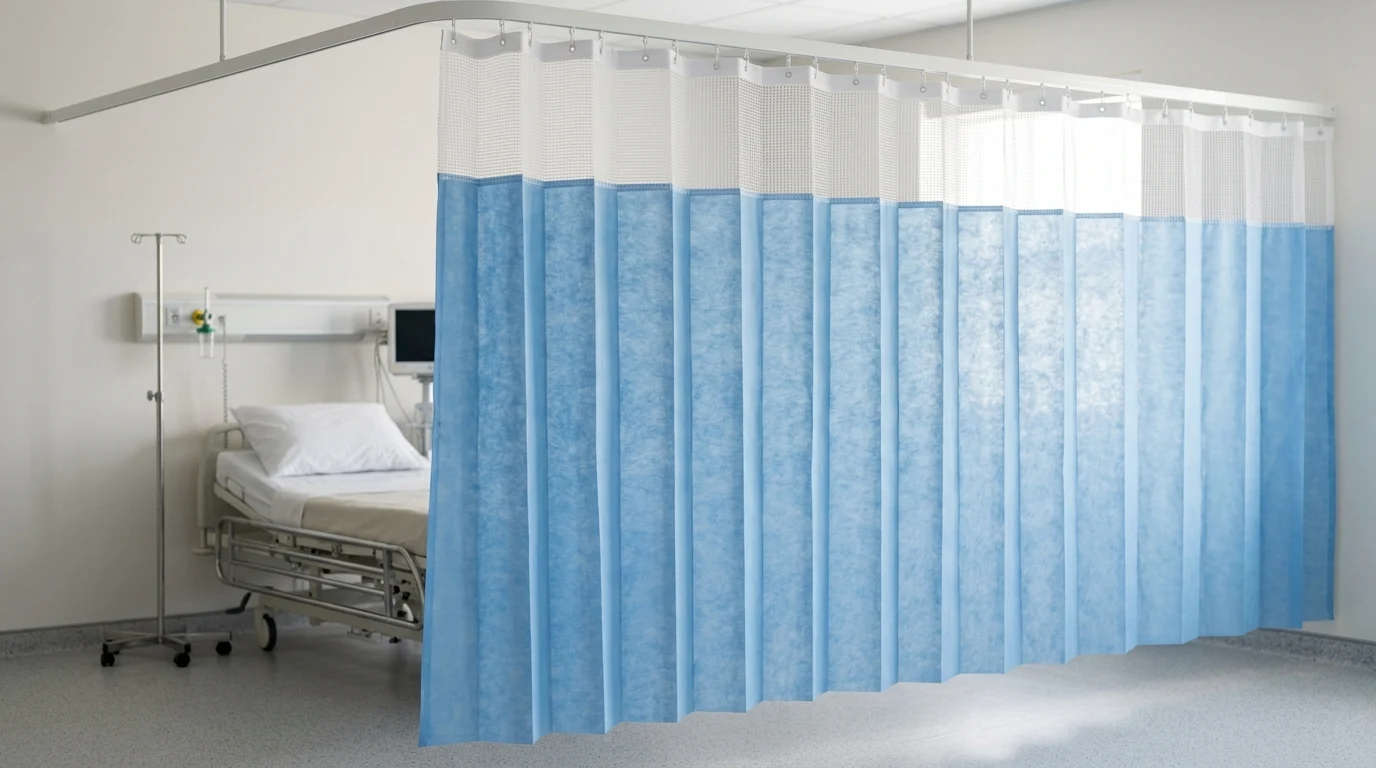
In healthcare settings, a privacy curtain is more than a visual barrier—it is part of the facility’s infection-control and fire-safety ecosystem. Disposable hospital curtains offer fast replacement after isolation use and reduce laundering demands, but their non-woven polypropylene construction must be evaluated carefully in oxygen-rich wards, ICUs, and equipment-dense patient areas. This article explains why flame-retardant performance matters, how inherent and coated treatments differ, and how curtain specifications connect with broader codes such as NFPA 101 and NHS Firecode. For procurement teams, estates managers, and infection-control leads, the goal is clear: choose curtains that support hygiene without introducing avoidable fire risk.
Why Flame-Retardant Disposable Hospital Curtains Matter
Modern healthcare facilities face a continuous mandate to balance rigorous infection control with stringent environmental safety protocols. The transition from traditional, launderable fabrics to modern alternatives has introduced new regulatory considerations, primarily surrounding fire safety. Because clinical environments often feature elevated oxygen levels and dense concentrations of electronic medical equipment, the materials used to partition patient spaces must inherently resist ignition.
Ensuring these materials meet exact flammability thresholds is not merely a matter of regulatory compliance, but a critical safeguard against catastrophic facility incidents. Healthcare buyers must navigate material sciences and regional fire codes to mitigate these dual risks effectively. Furthermore, textile standards interact with overarching healthcare fire codes—such as the NFPA 101 Life Safety Code in the United States or the NHS Firecode in the United Kingdom—meaning fabric compliance is only one component of a facility's broader, facility-level safety strategy.
What Disposable Hospital Curtains Are
Engineered primarily from non-woven polypropylene (PP), disposable hospital curtains are designed to be replaced periodically—typically per facility protocol, or immediately following an isolation patient's discharge. The standard material weight provides an optimal balance between opacity for patient privacy and lightweight handling for rapid installation.
Unlike standard domestic textiles, these clinical partitions are manufactured using specialized extrusion processes. While some products rely on properly applied topical coatings to meet safety standards, others achieve inherent flame retardancy by embedding chemical additives directly into the polymer melt prior to extrusion. This ensures the flame-retardant properties are integrated into the structural matrix of the curtain, rather than applied as a surface treatment that could degrade over time or during transit. When evaluating these chemistries, buyers should also consider environmental and health trade-offs; for instance, halogen-free compounds are increasingly preferred over traditional halogenated options to reduce toxic emissions during combustion. Additionally, facilities must account for the disposal waste-stream implications of single-use flame-retardant products, as the accumulation of treated polymers requires specialized waste management strategies.
Key Fire Safety and Clinical Risks
The clinical environment presents a unique fire triangle. Oxygen-enriched atmospheres, common in respiratory wards and intensive care units, can lower the ignition temperature of standard textiles while simultaneously accelerating the rate of flame spread. When combined with the thermal output of defibrillators, patient monitors, and motorized beds, the risk of accidental ignition is significantly elevated.
Beyond material flammability, overall fire safety relies heavily on system-level installation requirements. Proper track installation, adequate ceiling spacing to ensure sprinkler systems remain unobstructed, and overall track integrity are distinct but critical components of a facility's safety infrastructure that must align with local fire marshal directives.
If a non-compliant privacy screen ignites, it can act as a conduit for fire, potentially spreading flames toward ceiling infrastructure and HVAC returns. Additionally, the combustion of untreated polypropylene yields burning polymer drips and toxic smoke, which can cause severe inhalation injuries and impede emergency evacuation routes. Consequently, specifying curtains with certified self-extinguishing properties is a mandatory clinical risk management strategy.
Flame-Retardant Standards and Testing Requirements

Validating the safety of medical textiles requires adherence to standardized testing protocols that simulate real-world ignition scenarios. Regulatory bodies across different jurisdictions have established specific parameters that dictate how a material must behave when exposed to an open flame. These standards measure variables such as ignition time, flame spread rate, and the formation of flaming debris.
Because healthcare supply chains are increasingly globalized, buyers must understand the nuances of these regional testing methodologies to ensure imported products meet local fire marshal requirements.
Key Test Methods by Region
In North America, the benchmark standard is defined by the National Fire Protection Association under NFPA 701 (Method 1). Under this protocol, a material sample is subjected to a standardized gas flame for a set duration. To pass, the fabric must exhibit strict weight loss limits, and any fragments or residues falling to the test chamber floor must extinguish rapidly. This stringent requirement ensures that melting polymers do not initiate secondary fires.
In the United Kingdom, the British Standards Institution's BS 5867 Part 2 Type C is the prevailing standard, while other European countries typically follow EN 13773 or their own national equivalents. The British test is notably rigorous, assessing the fabric's resistance to ignition from a localized flame. The material must not allow the flame to reach any edge of the sample, nor can it produce flaming droplets. Similarly, the AS/NZS 1530 Parts 2 and 3 govern Australasian markets, focusing heavily on the Spread of Flame Index and the Smoke Developed Index, demanding strict adherence to zero-spread metrics for clinical compliance.
Standards Comparison for Healthcare Buyers
Navigating these disparate regulations requires a clear understanding of overlapping criteria. The following table outlines the primary metrics associated with the most common global standards to assist buyers in cross-referencing specifications.
| Standard | Primary Region | Ignition Source | Key Pass Criteria |
|---|---|---|---|
| NFPA 701 (Method 1) | United States, Canada | Standardized gas flame | Strict weight loss limits; rapid debris extinguishment |
| BS 5867 Part 2 (Type C) | United Kingdom | Localized flame | Flame cannot reach edges; no flaming debris |
| EN 13773 | Europe | Vertical flame | Evaluates ignitability and flame spread |
| AS/NZS 1530.2 & .3 | Australia, New Zealand | Radiator & pilot flame | Zero flame spread; strict smoke limits |
| CAN/ULC-S109 | Canada | Standardized gas flame | Strict char length limits; rapid drip extinguishment |
By aligning product specifications with the correct regional standard, healthcare facilities can avoid costly compliance failures and ensure uninterrupted patient care operations.
How Buyers Should Specify and Verify Compliance
Procuring compliant single-use hospital curtains extends beyond simply requesting a flame-retardant label. Because the manufacturing of non-woven textiles is highly volume-driven, inconsistencies in polymer blending can lead to batches that fail to meet safety thresholds.
Key Takeaways
- Specify disposable hospital curtains with certified self-extinguishing performance because oxygen-rich clinical areas and medical electronics can increase ignition and flame-spread risks.
- Confirm whether flame retardancy is inherent in the polypropylene matrix or applied as a coating, since this affects durability, handling, and long-term confidence in compliance.
- Check curtain specifications against facility-level fire codes such as NFPA 101 in the United States or NHS Firecode in the United Kingdom, not only fabric test results.
- Maintain proper track installation, sprinkler clearance, and ceiling spacing so compliant curtains do not compromise the wider fire protection system.
- Consider halogen-free flame-retardant chemistries and disposal requirements when evaluating single-use treated polymer curtains.
Frequently Asked Questions
Why do disposable hospital curtains need flame-retardant properties?
Hospitals contain oxygen-enriched areas and electrical equipment that can increase ignition and flame-spread risks. Flame-retardant curtains help limit fire propagation, reduce burning drips and smoke, and support wider facility fire safety plans.
What materials are disposable hospital curtains usually made from?
Most disposable hospital curtains are made from non-woven polypropylene. This material is lightweight, provides patient privacy, and allows fast replacement according to facility infection-control protocols.
Are inherent flame-retardant curtains better than coated curtains?
Inherent flame-retardant curtains have additives embedded into the polymer during manufacturing, so protection is part of the material structure. Coated curtains can also comply, but buyers should confirm the coating is properly applied and remains effective during storage and use.
Which fire codes may affect hospital curtain selection?
Curtain compliance often interacts with broader healthcare fire codes, such as NFPA 101 Life Safety Code in the United States or NHS Firecode in the United Kingdom. Local fire marshal requirements should also be checked.
Can curtain installation affect fire safety?
Yes. Proper track installation, ceiling spacing, sprinkler clearance, and track integrity are critical. Even compliant curtains can create risk if they obstruct sprinklers or are installed against local fire safety requirements.